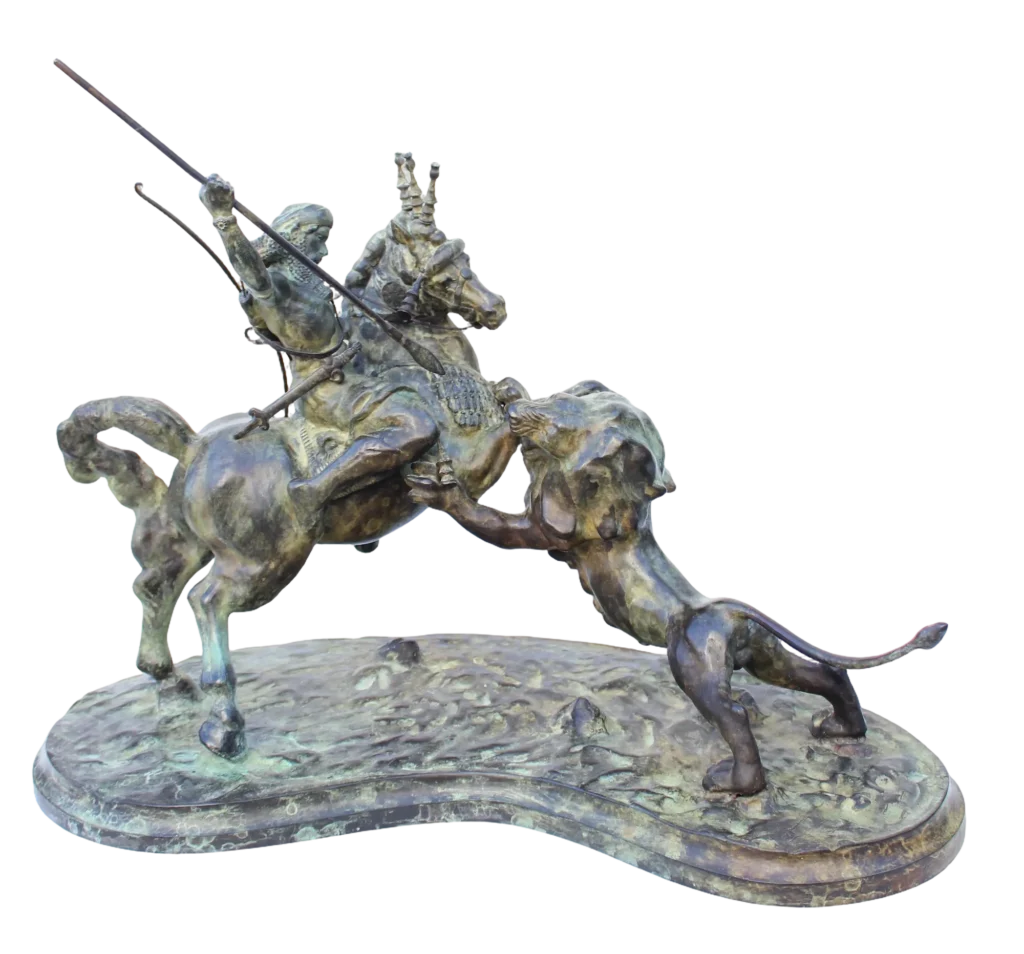
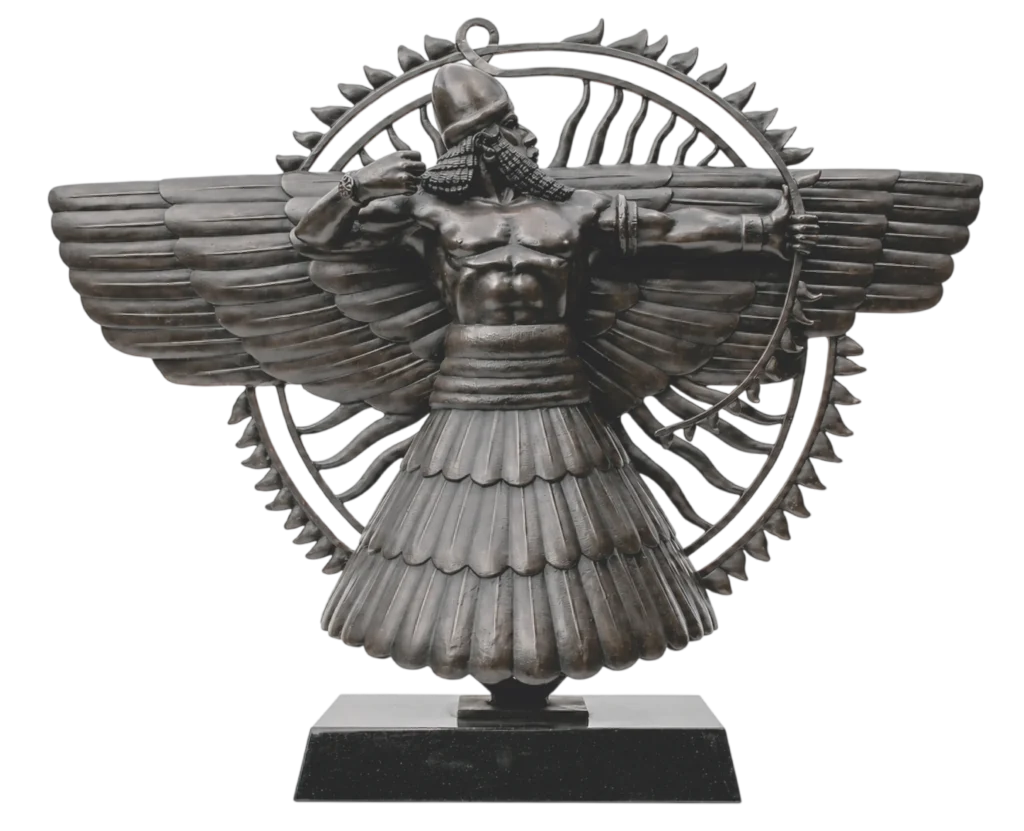
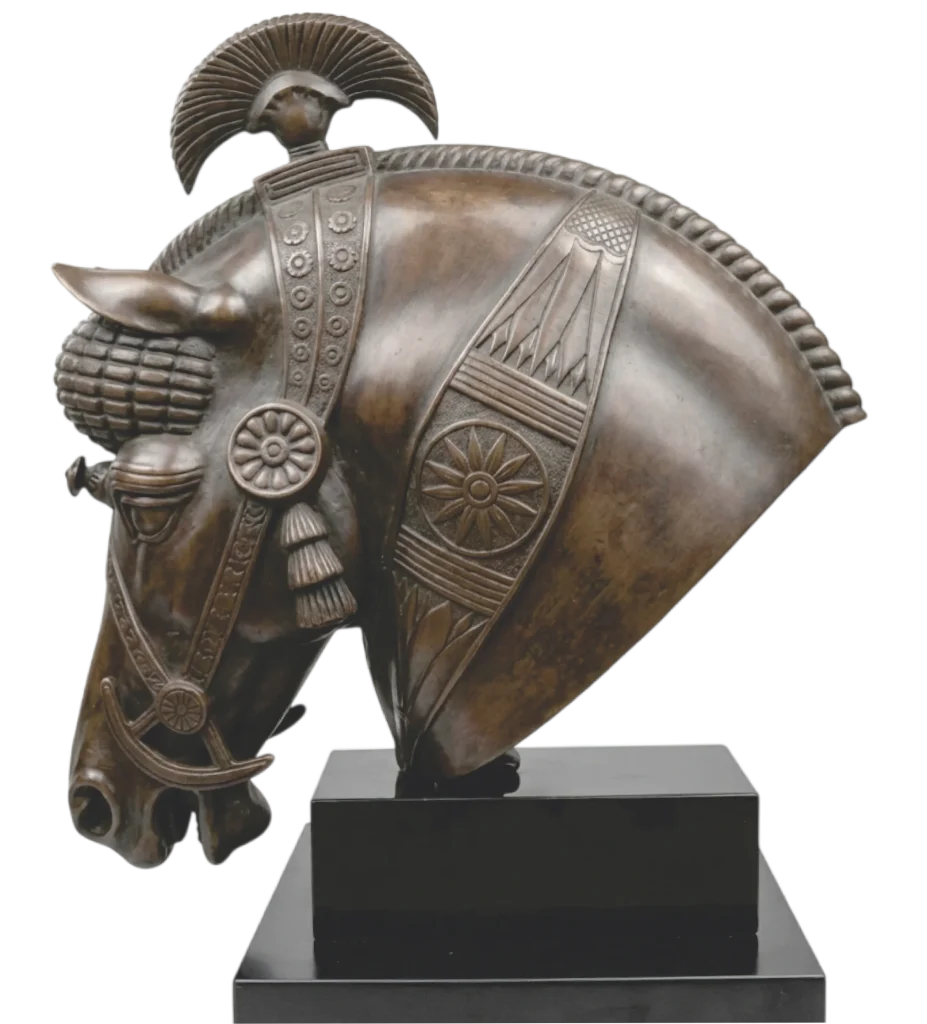
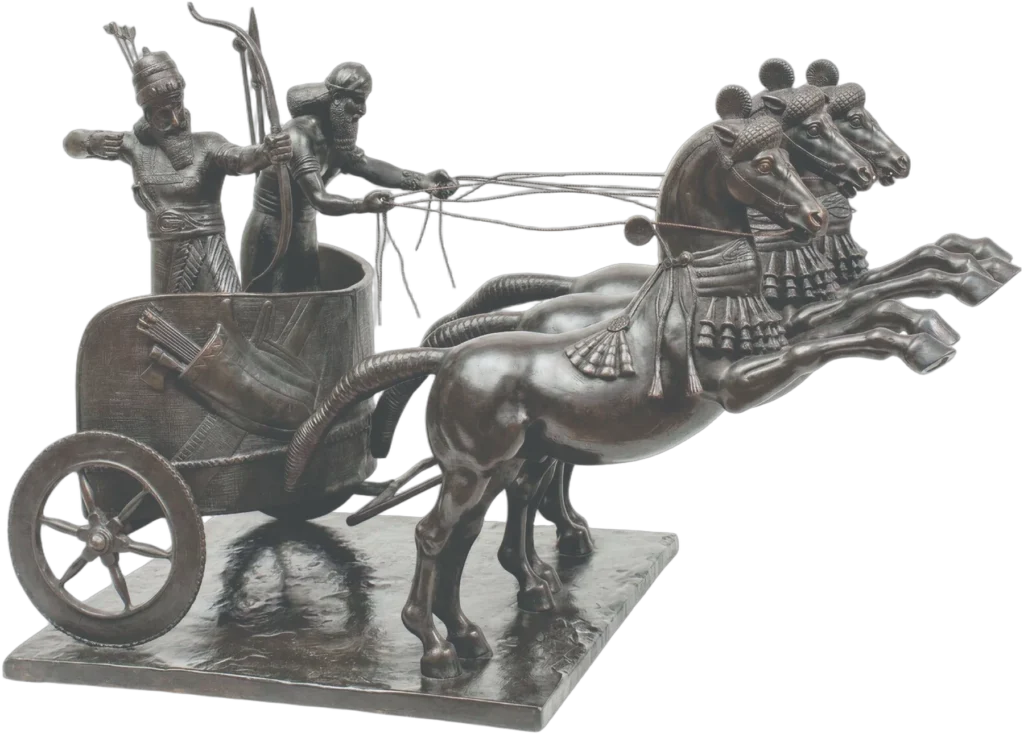
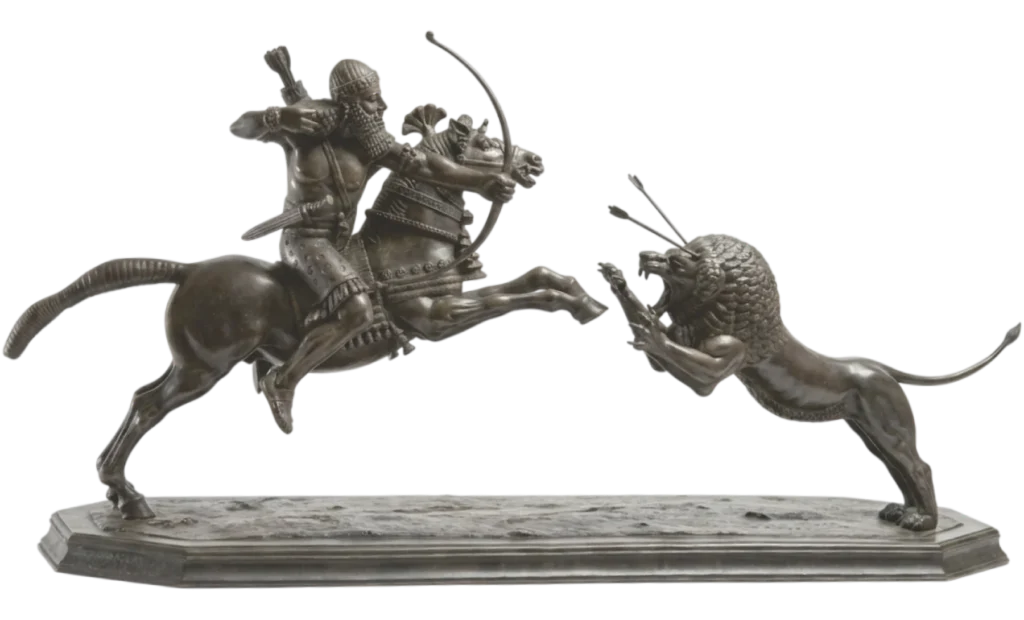
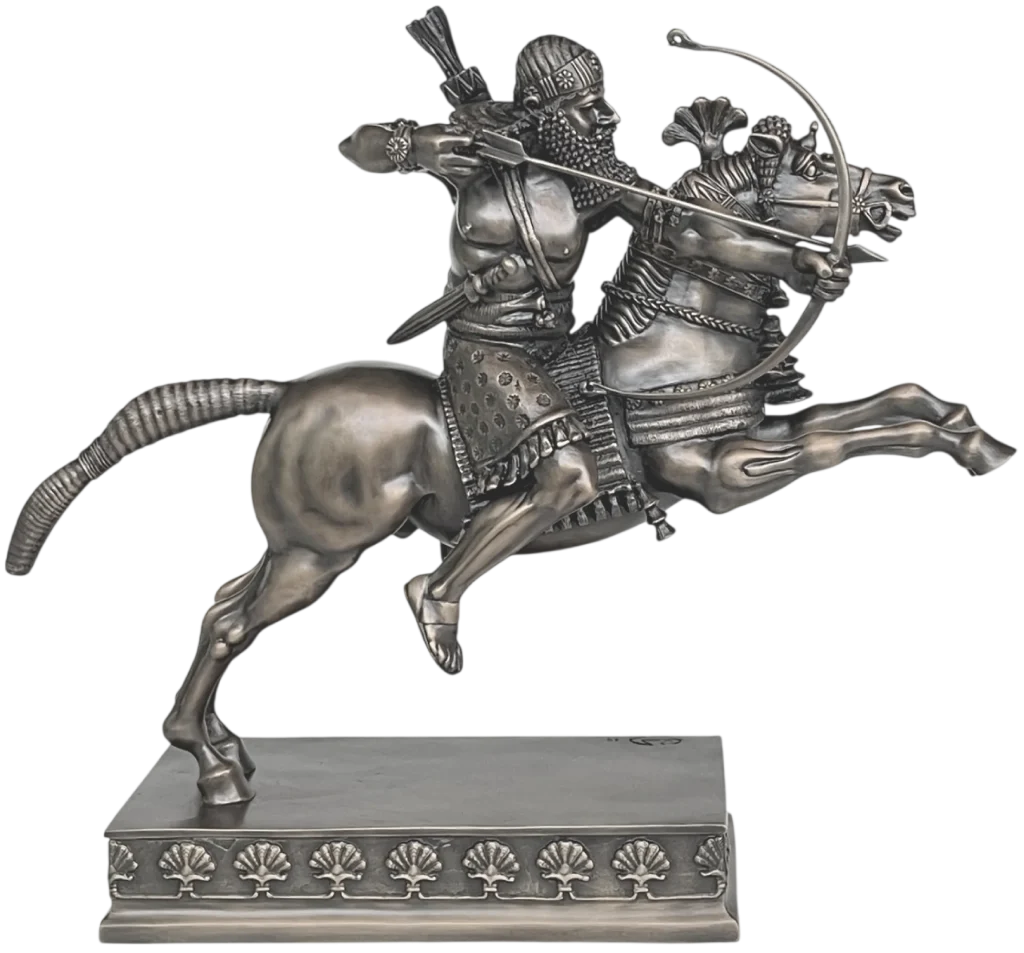
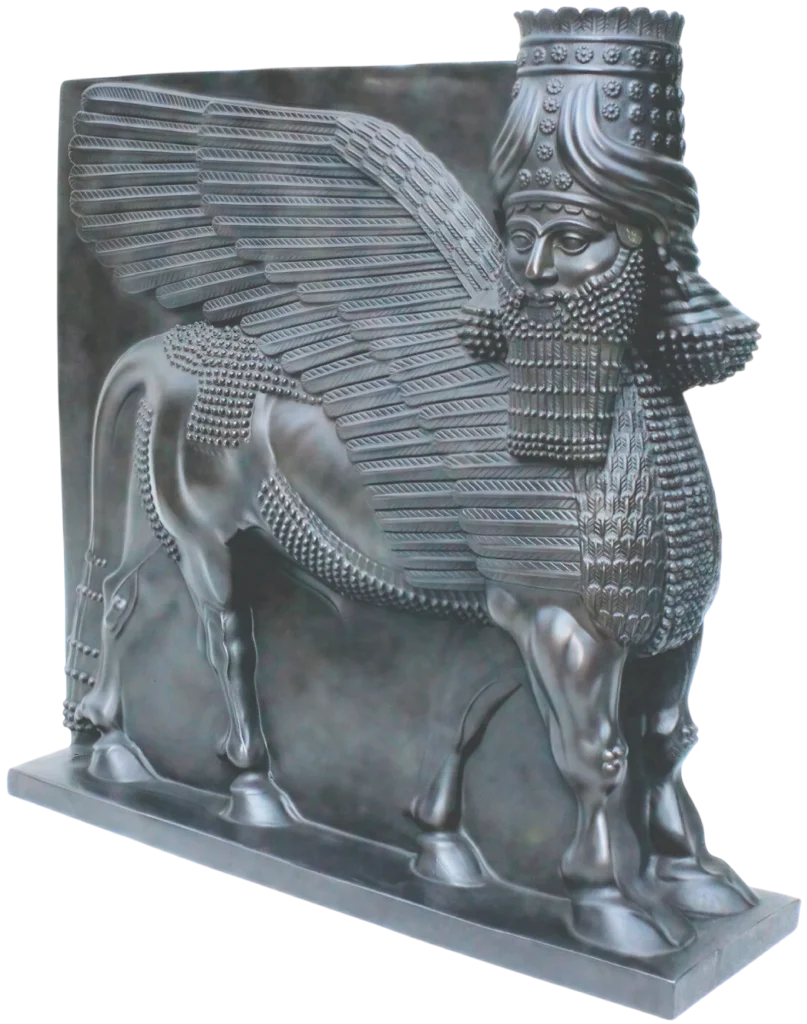
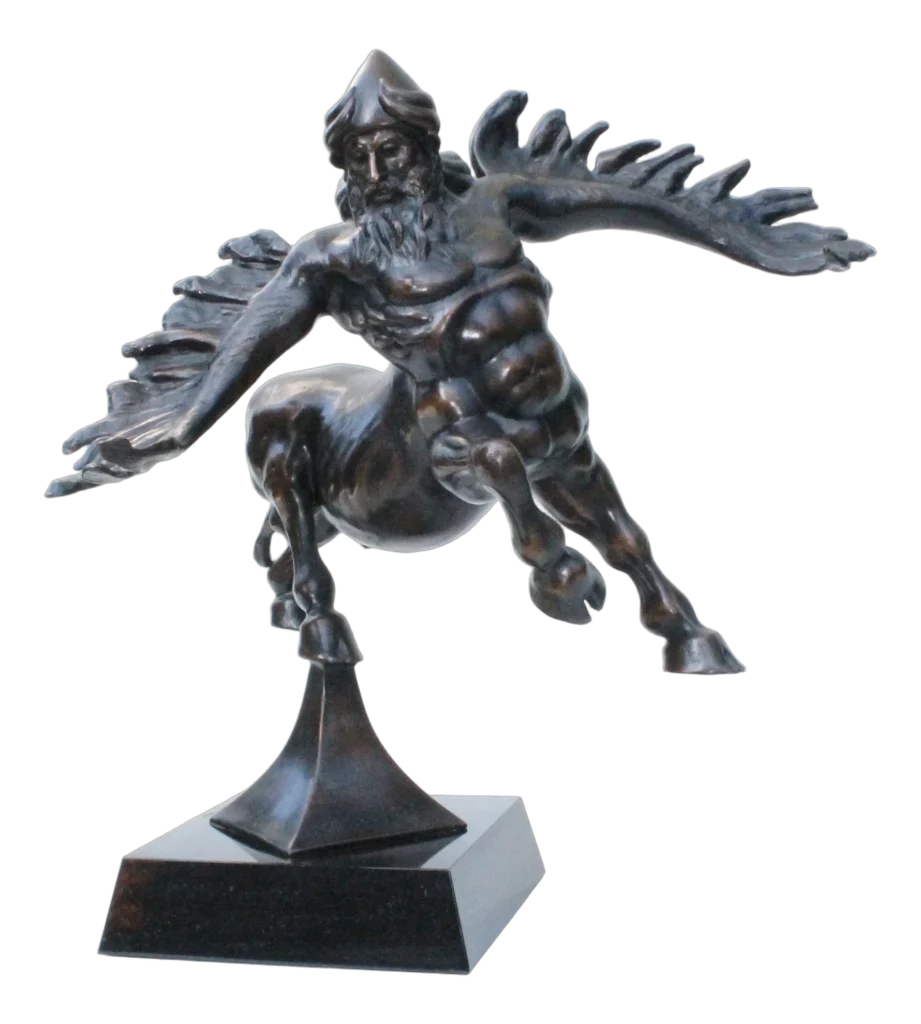
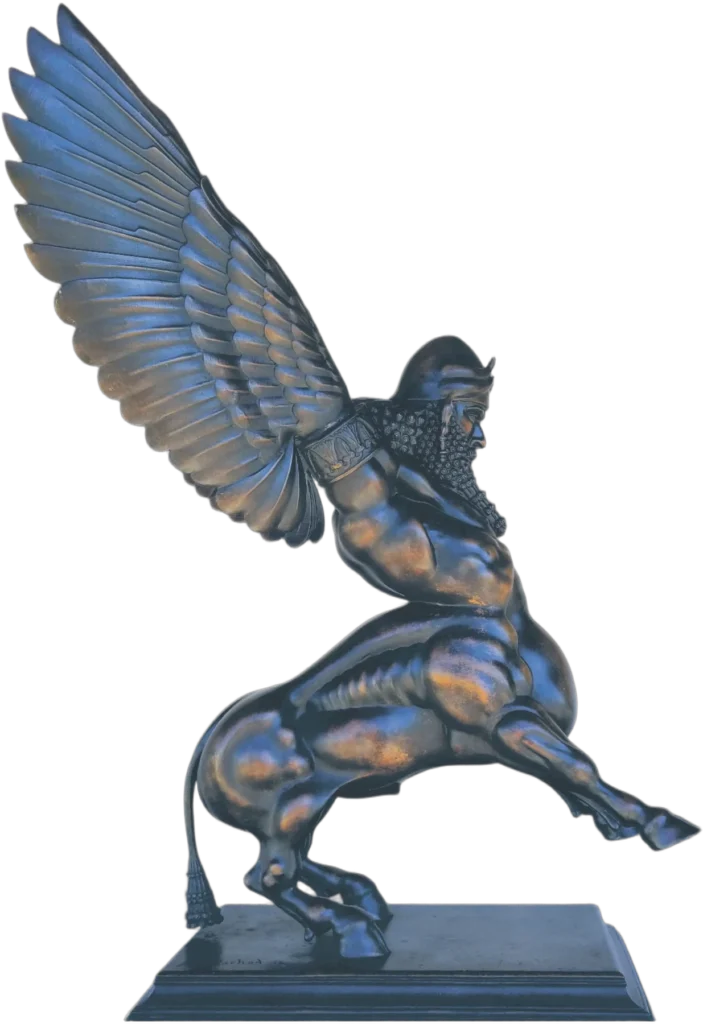
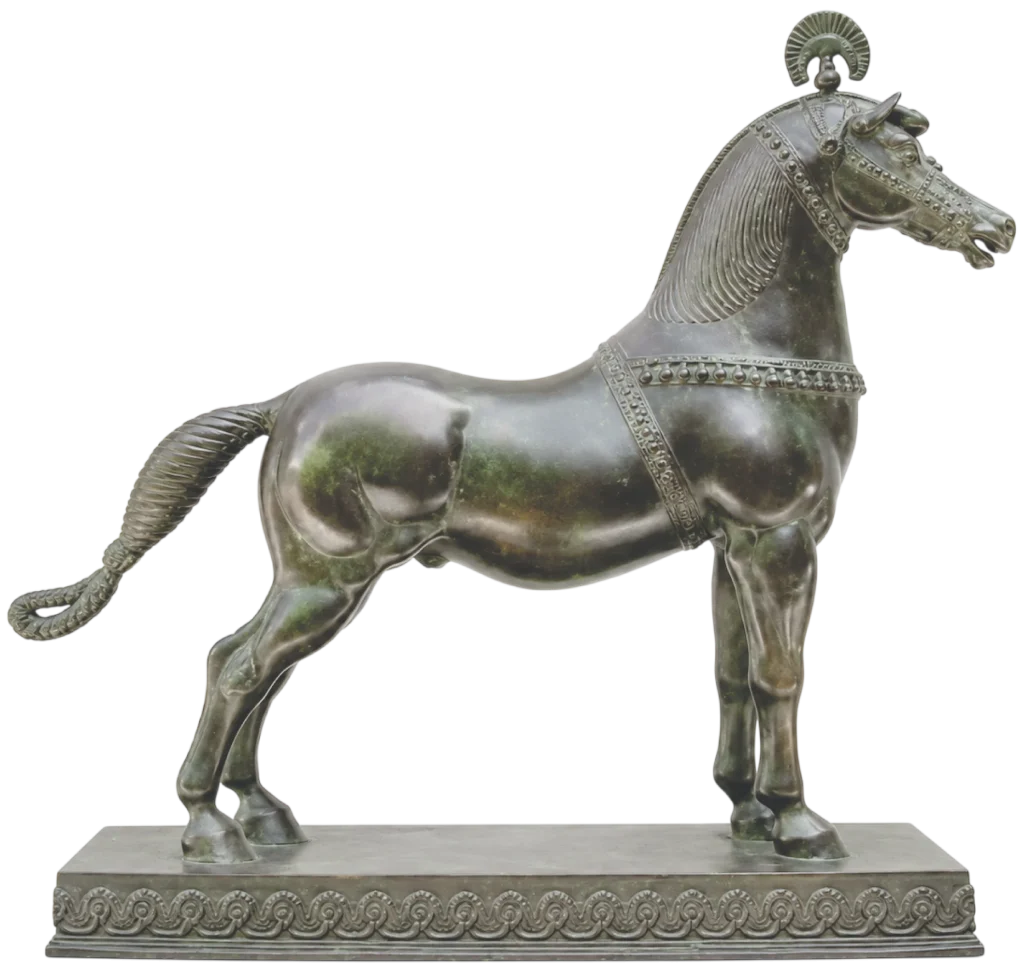
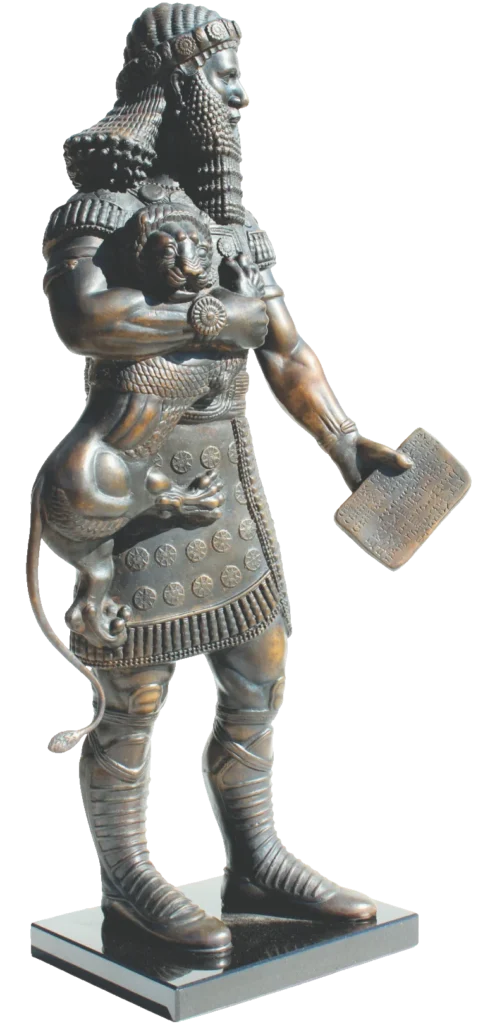
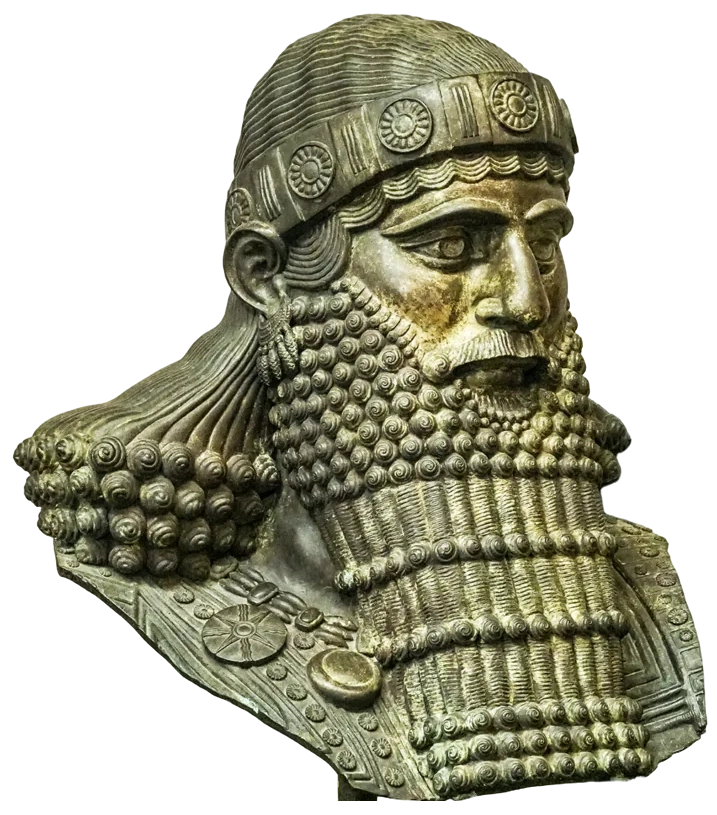
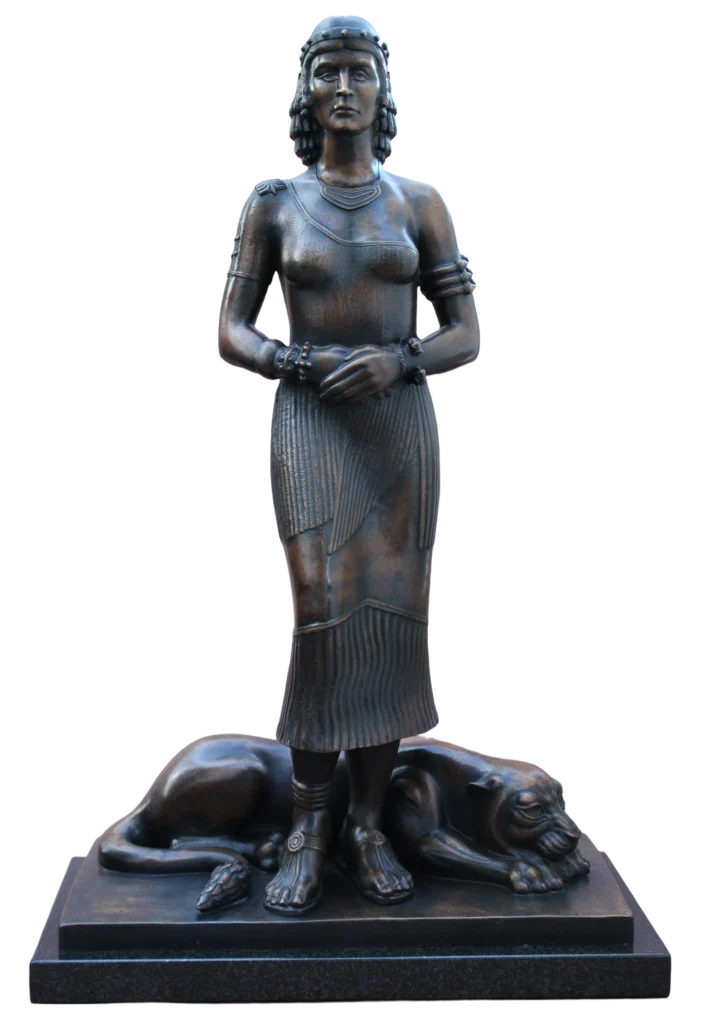
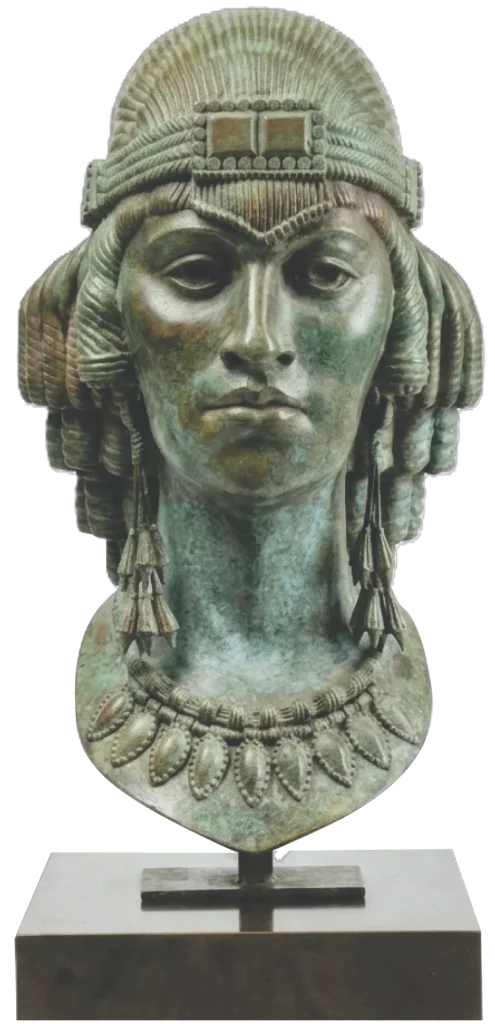
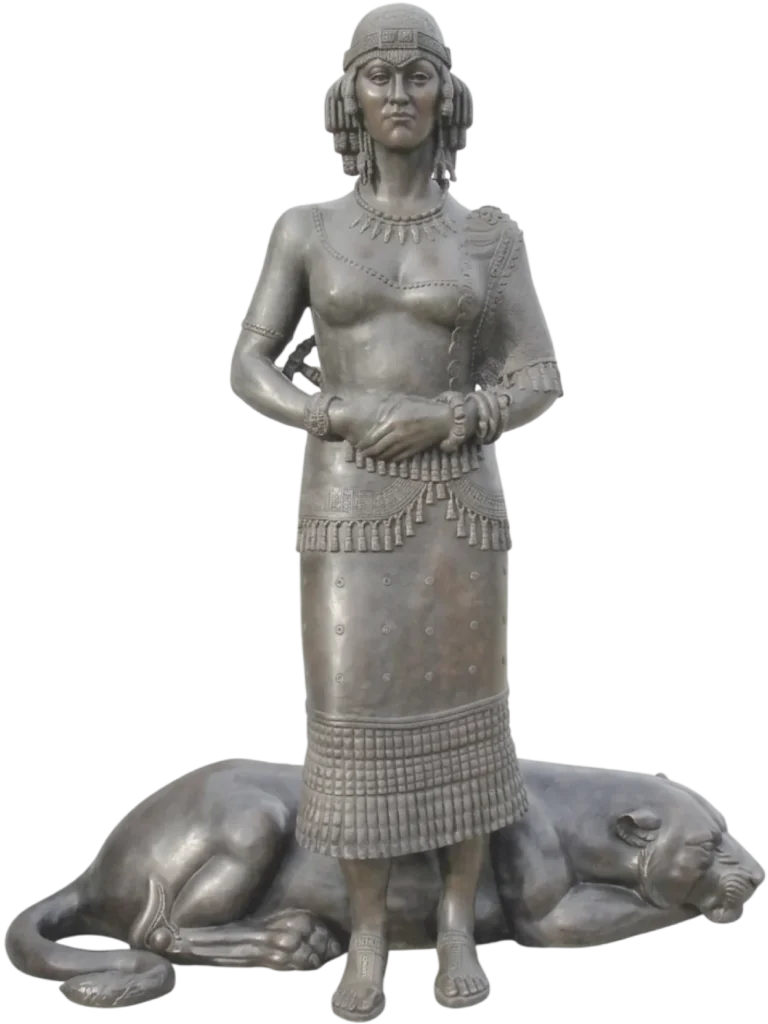
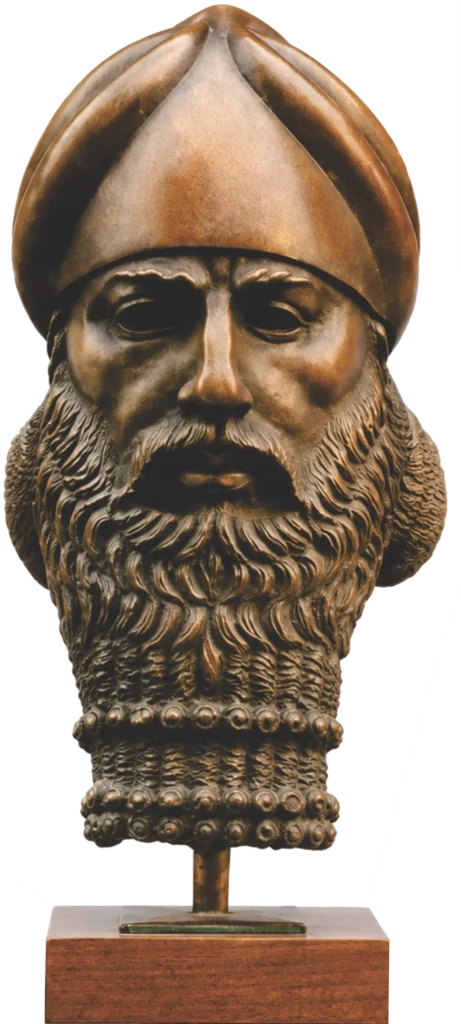
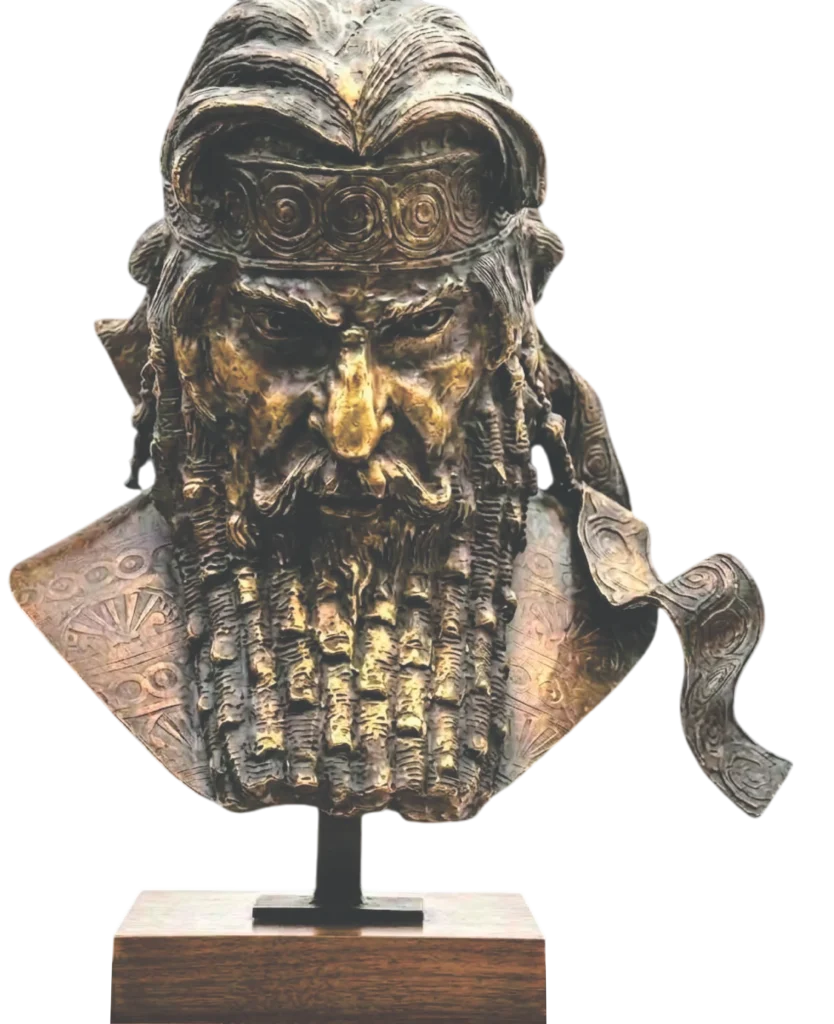
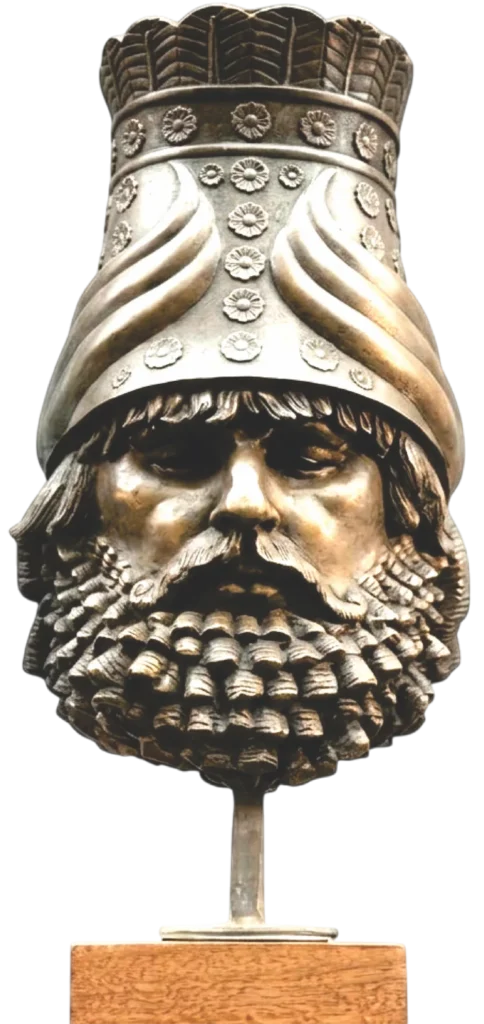
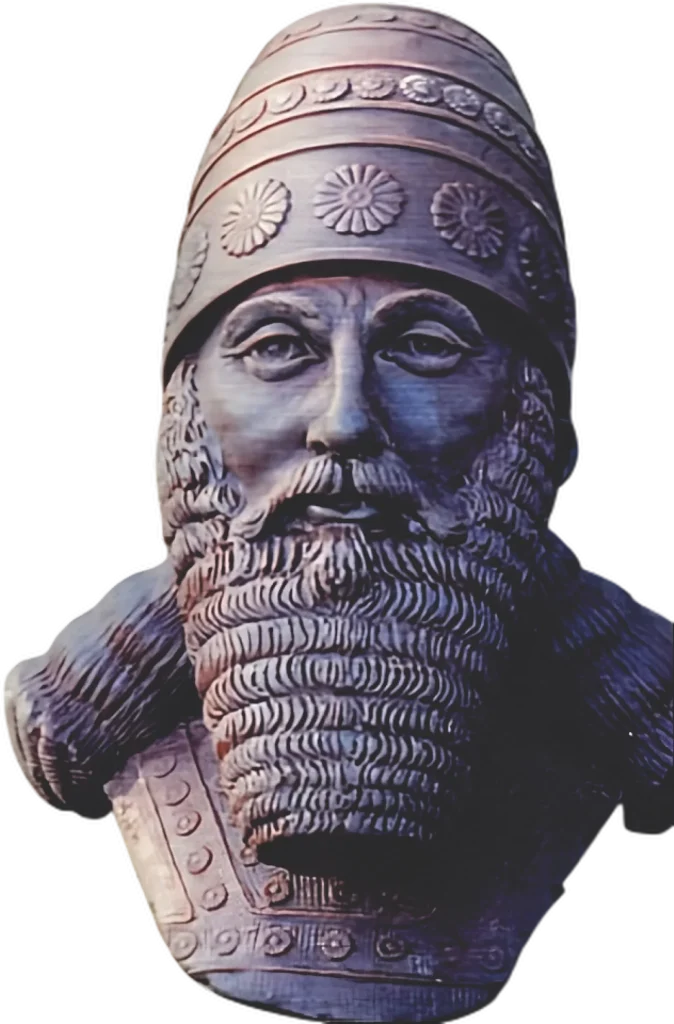
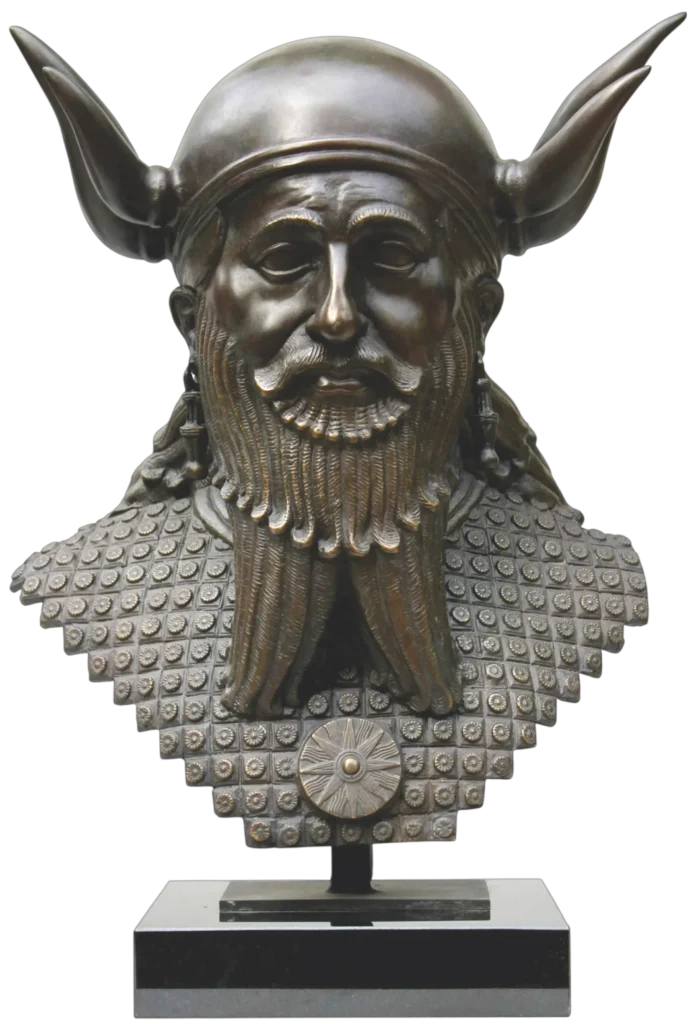
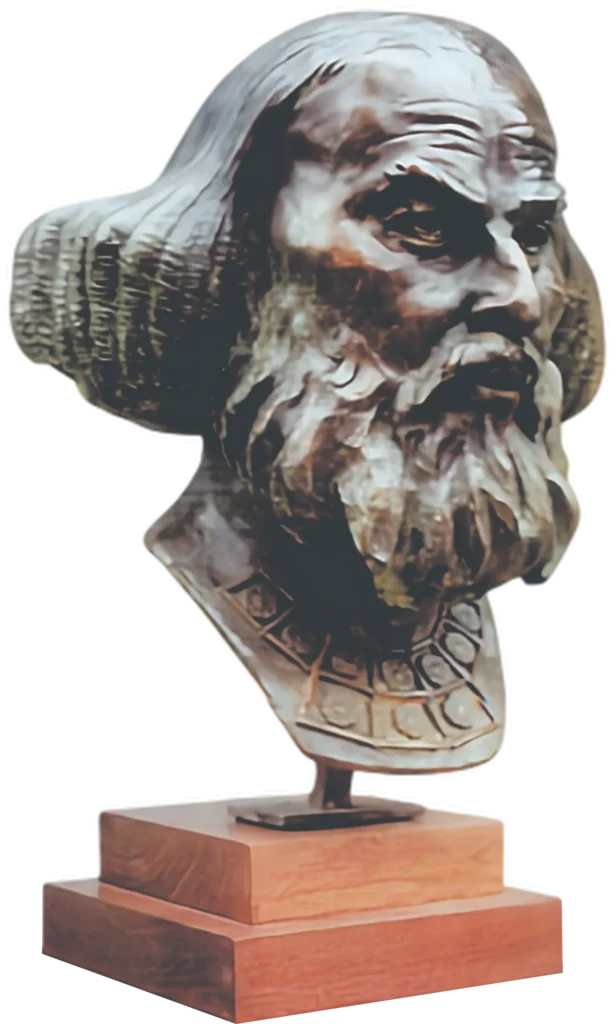
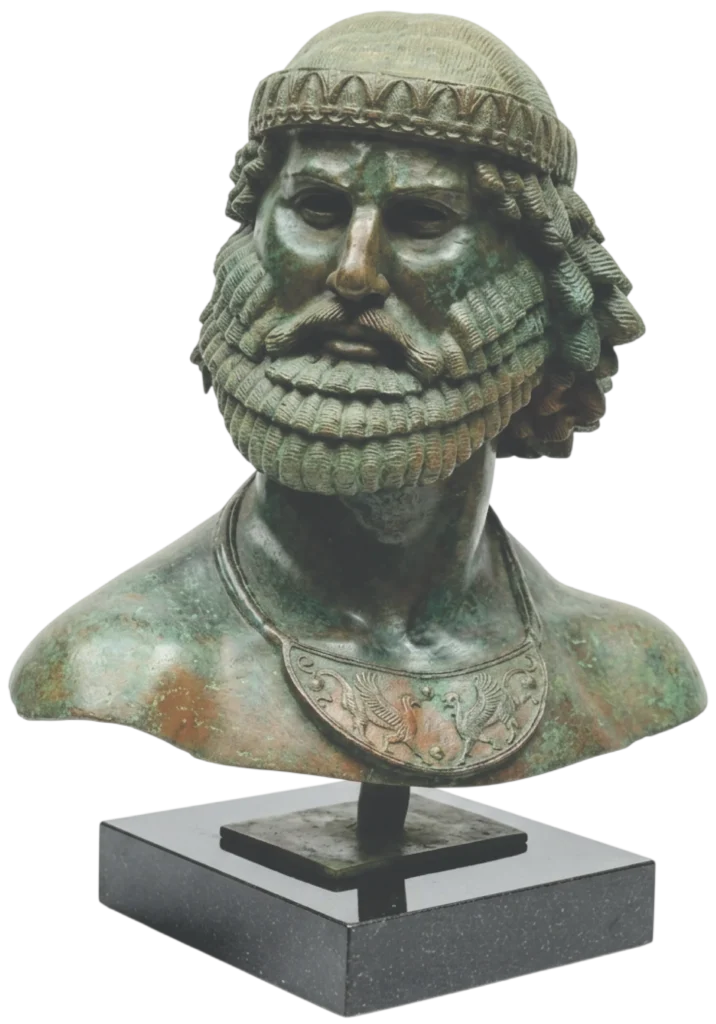
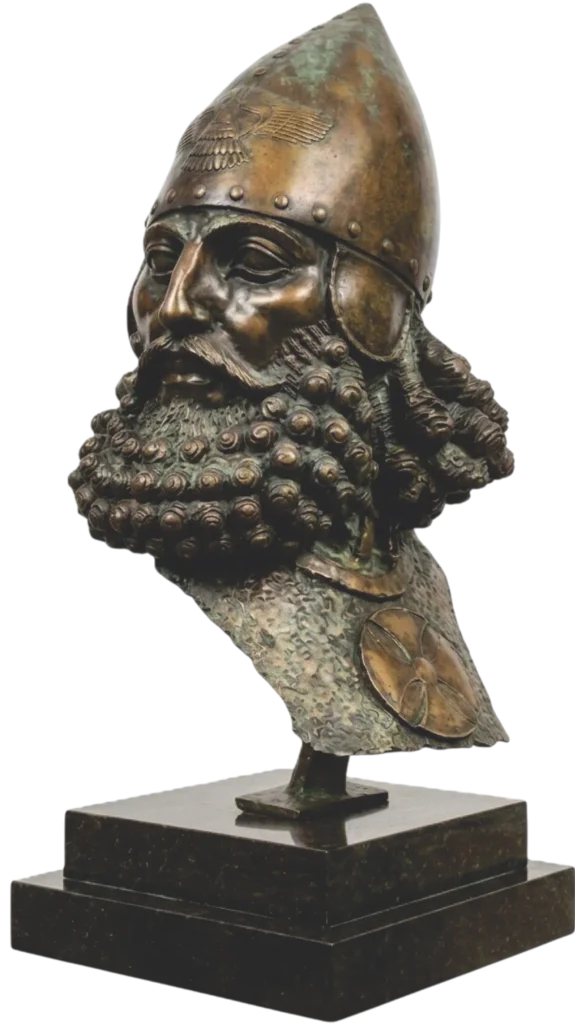
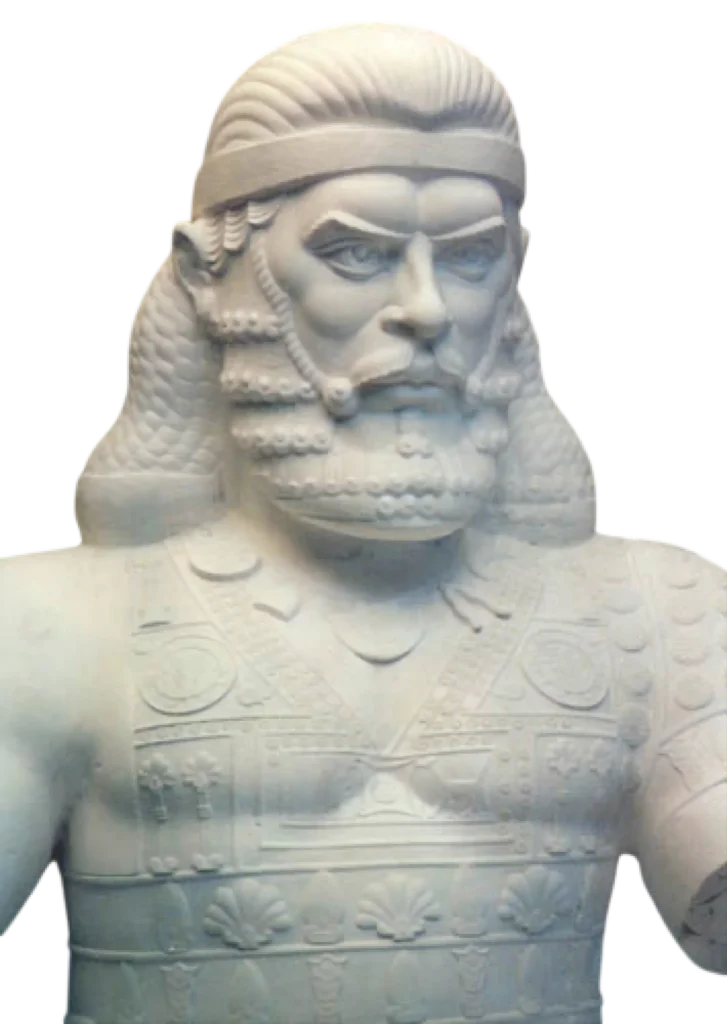
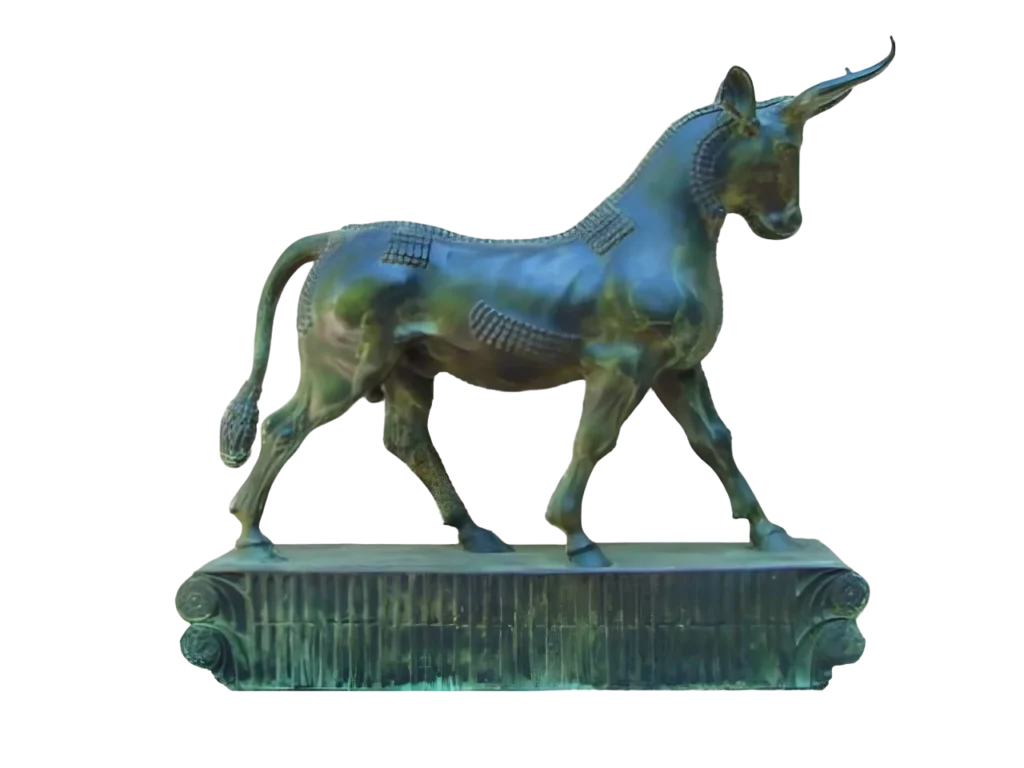
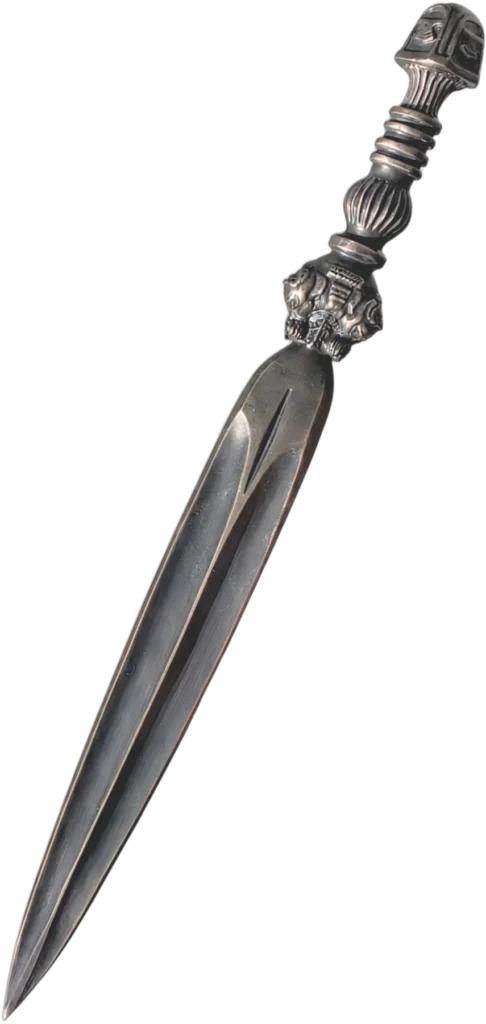
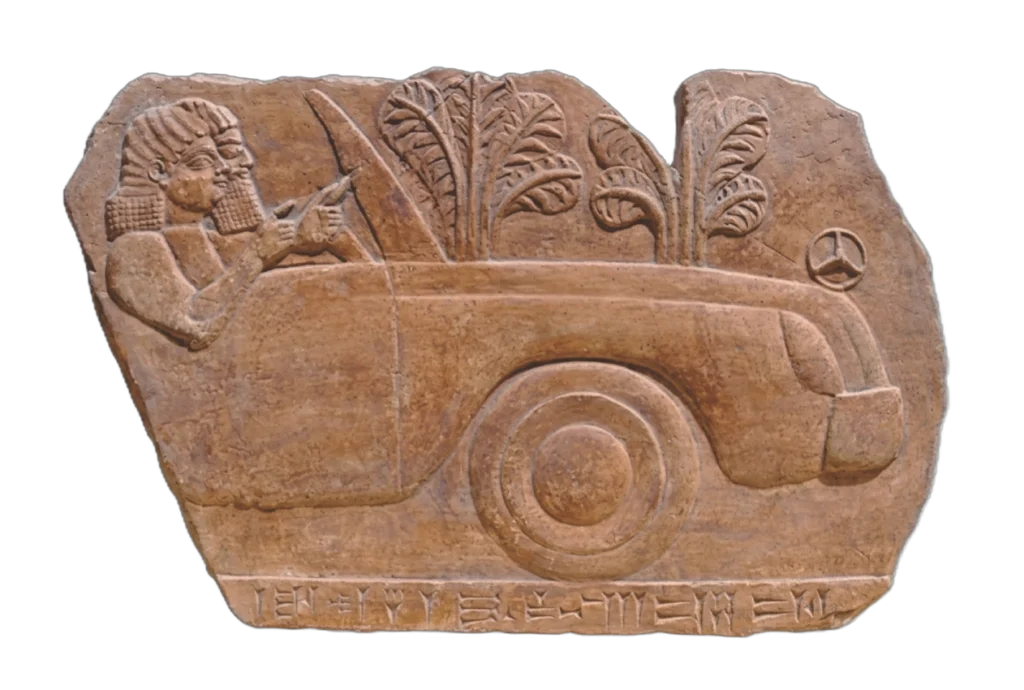
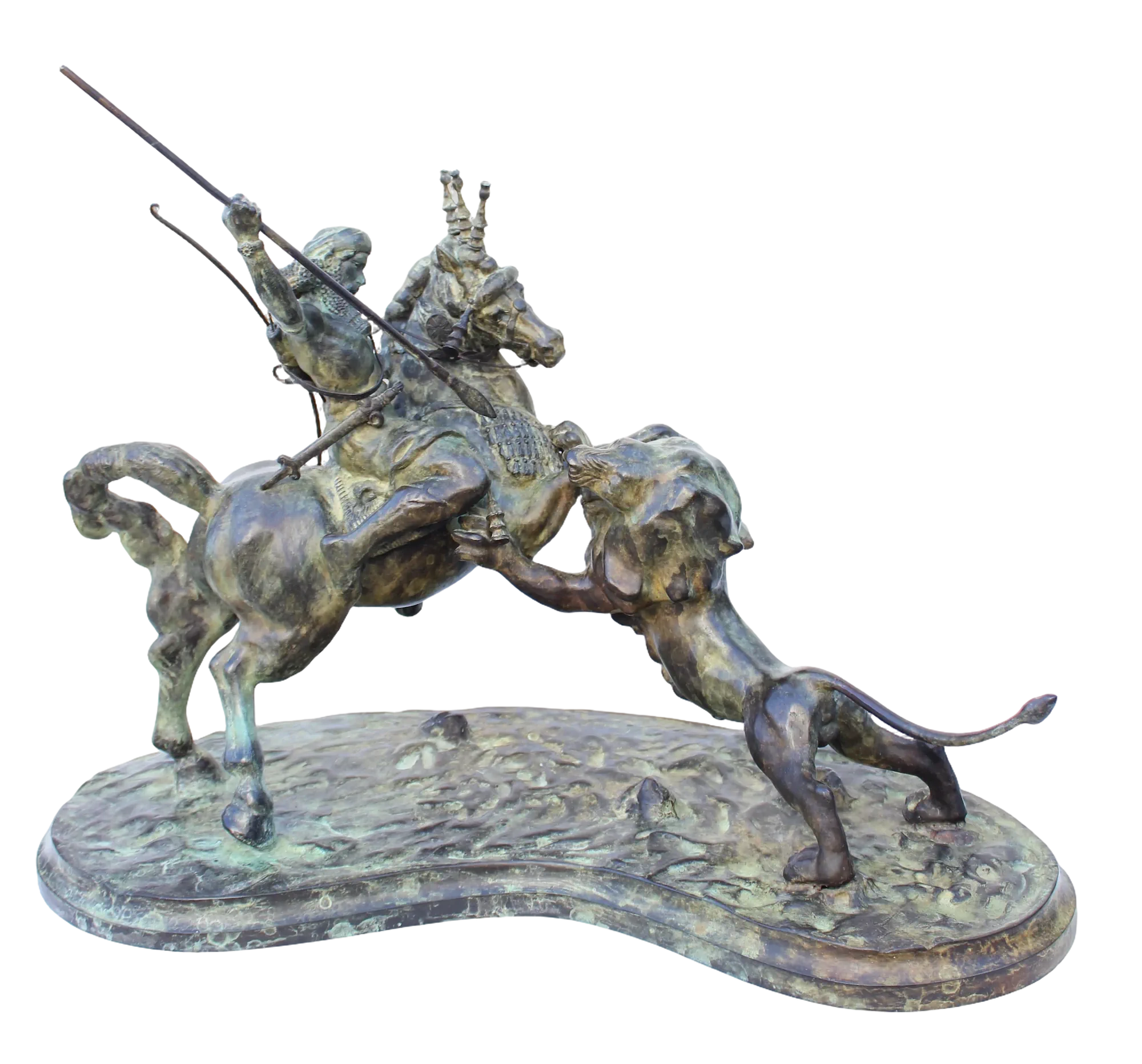
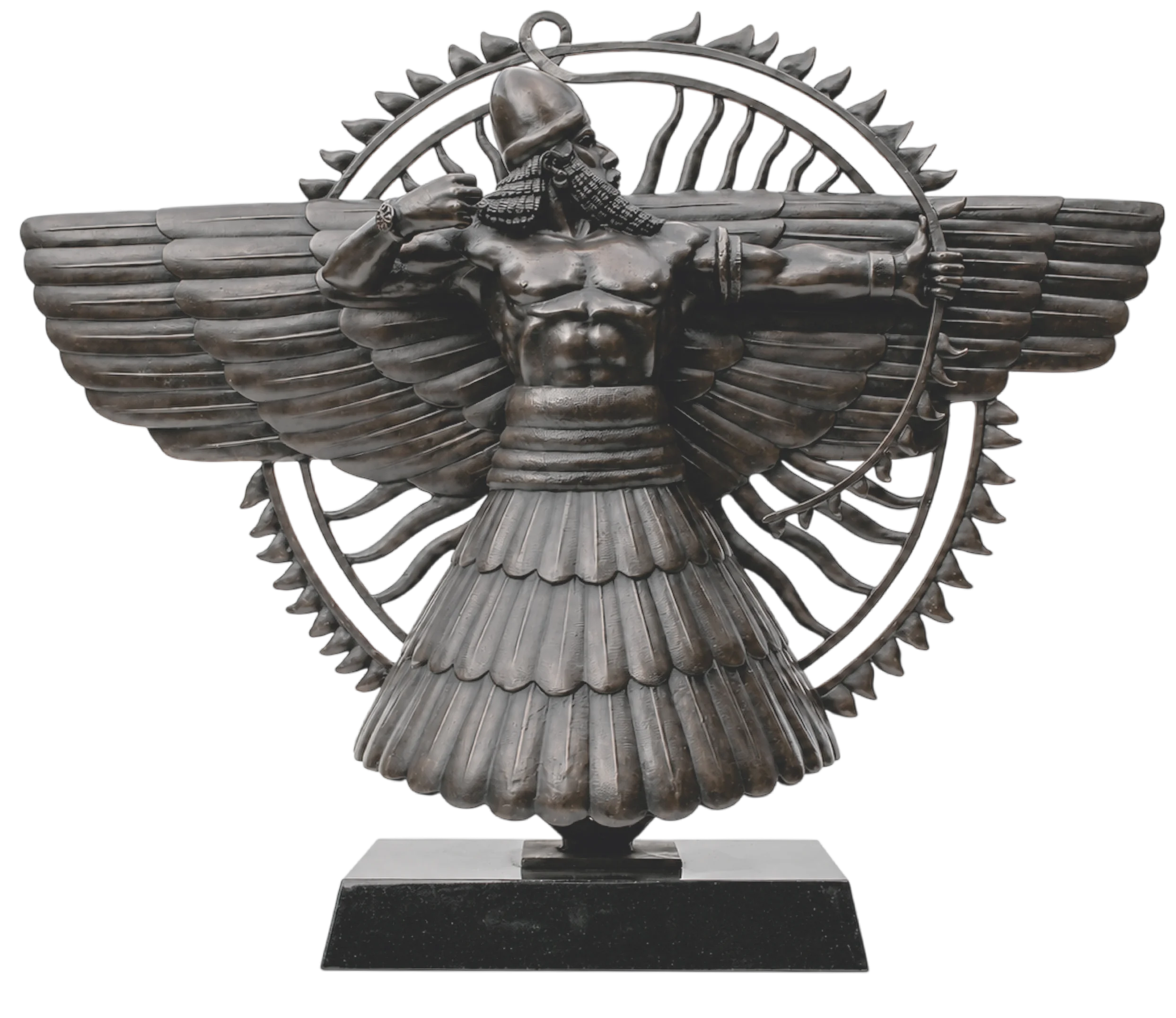
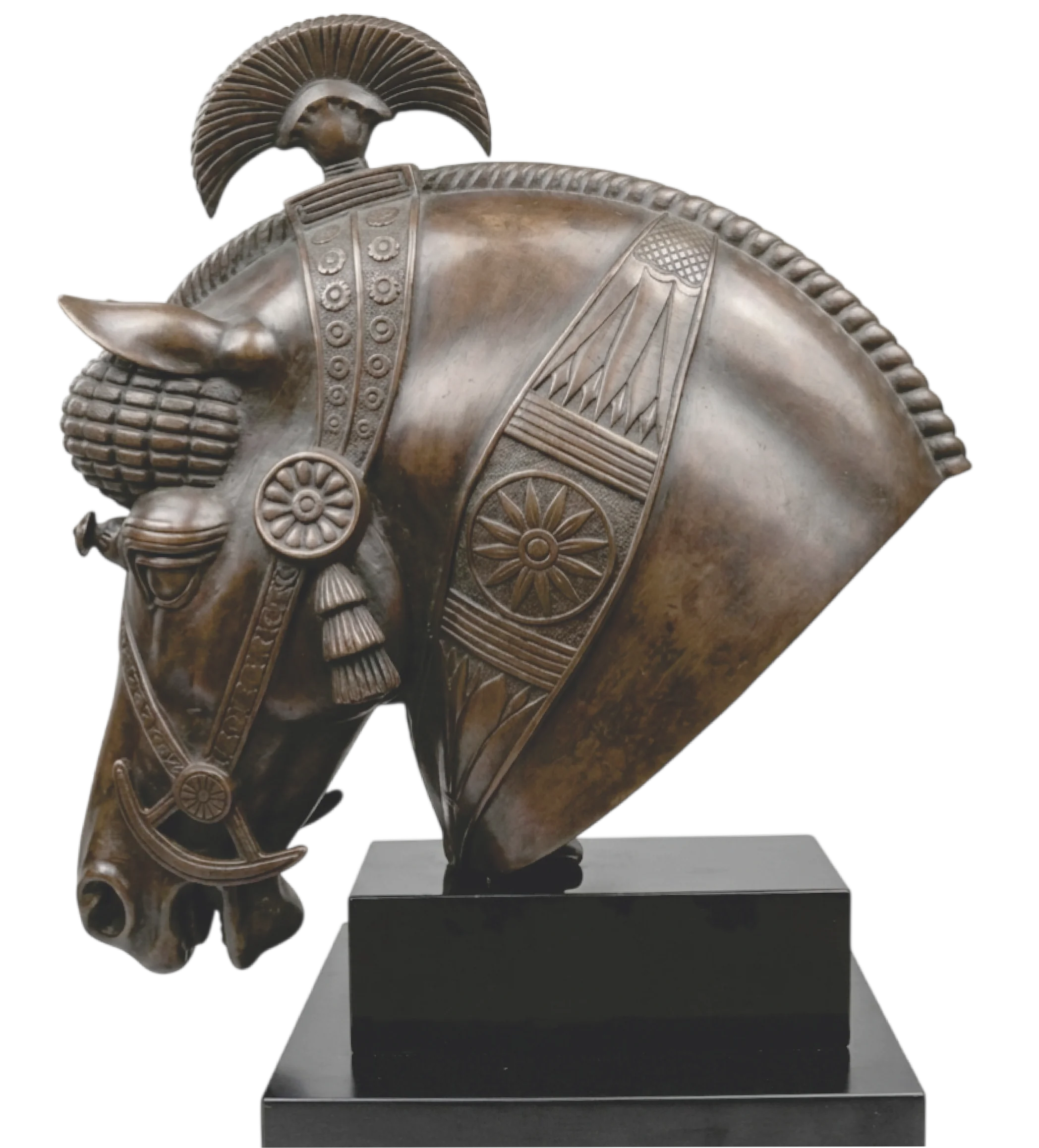
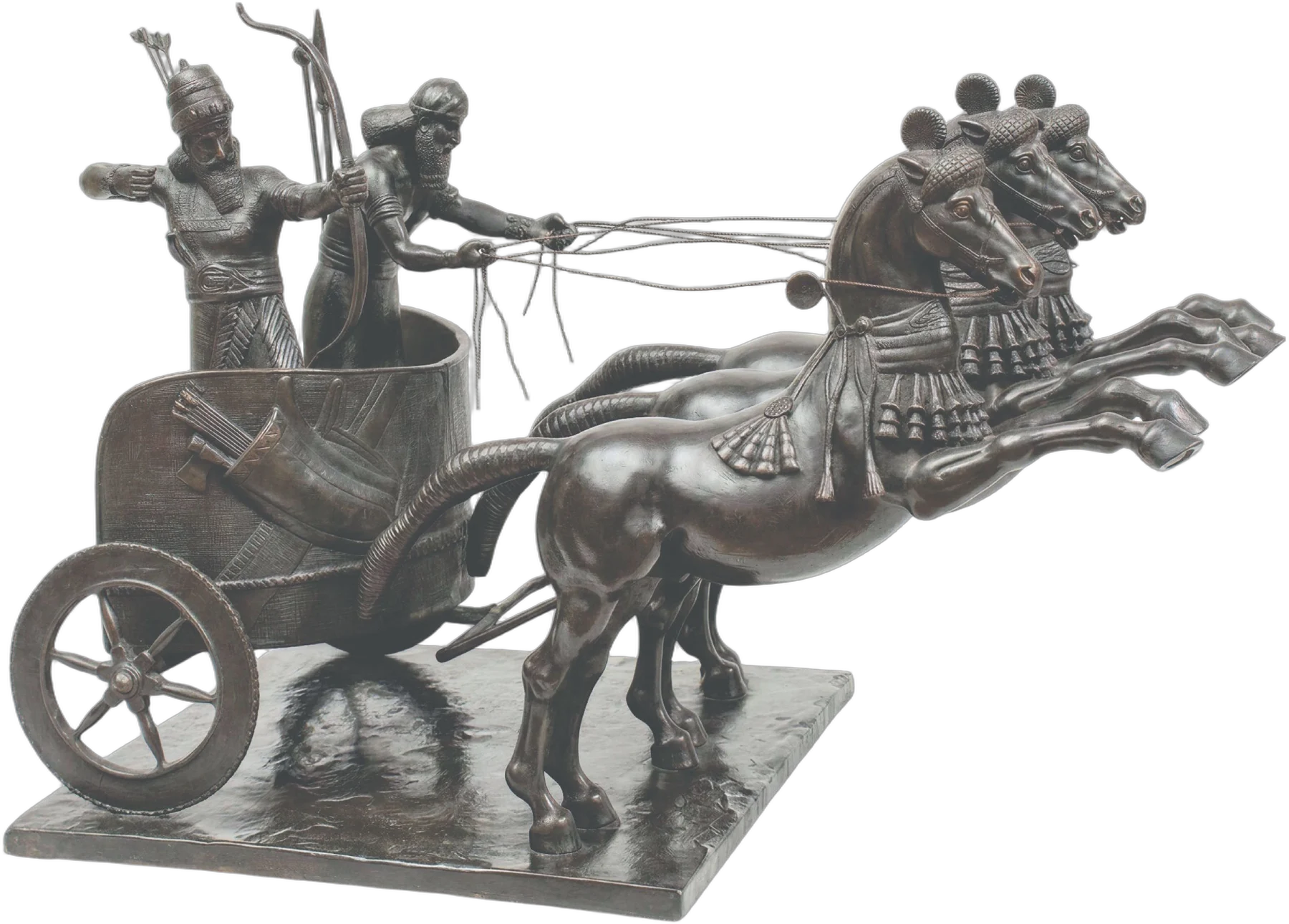
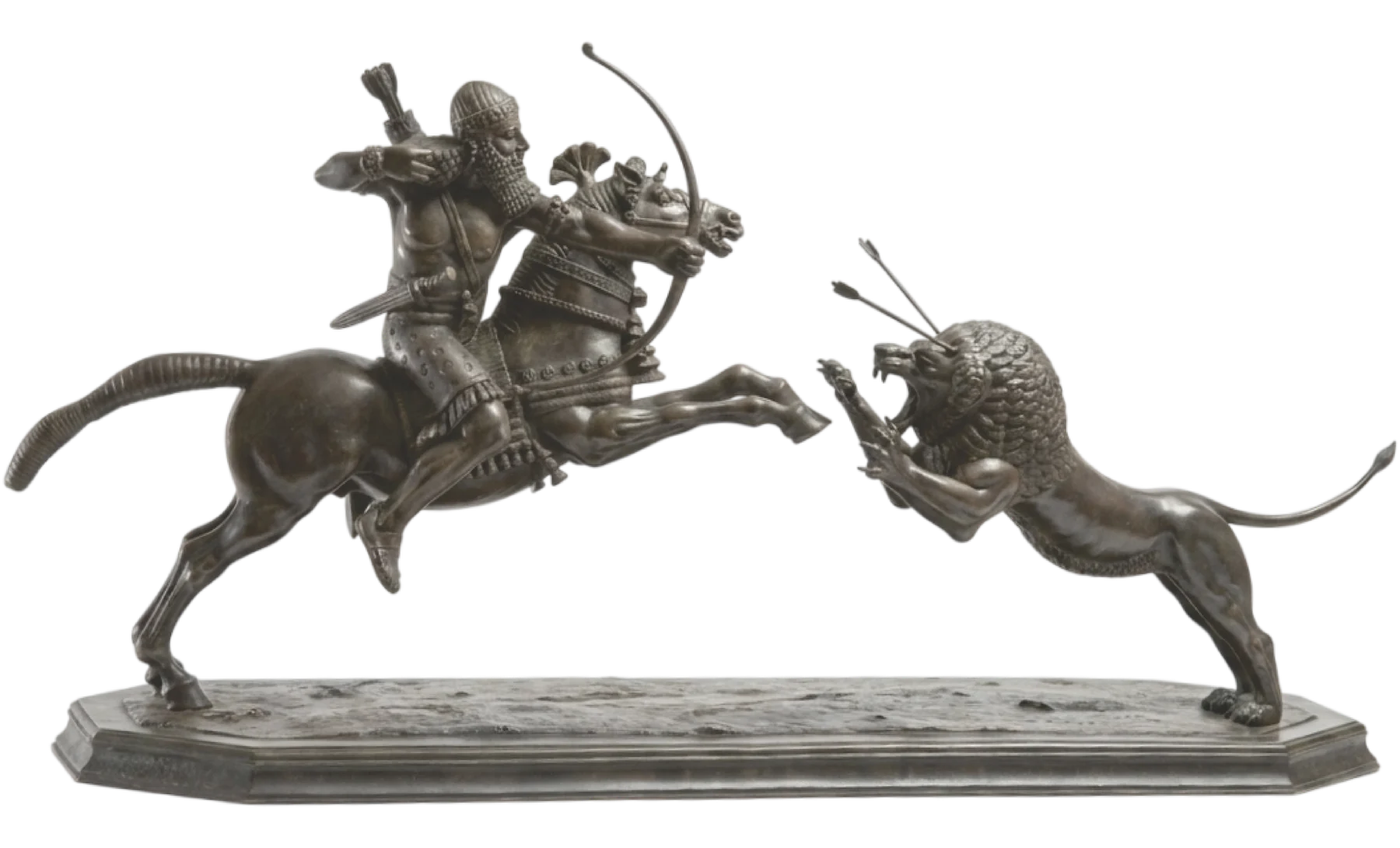
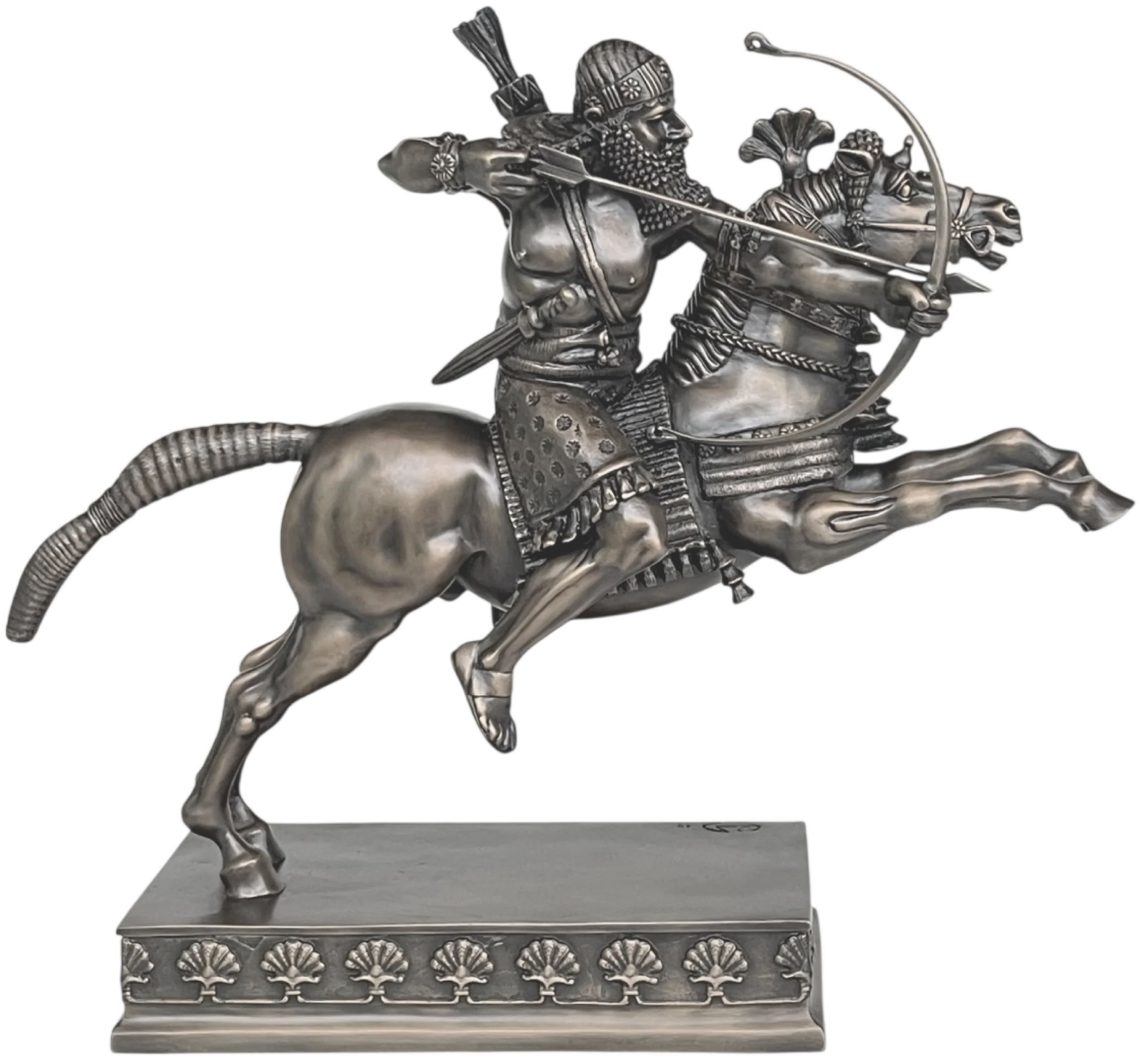
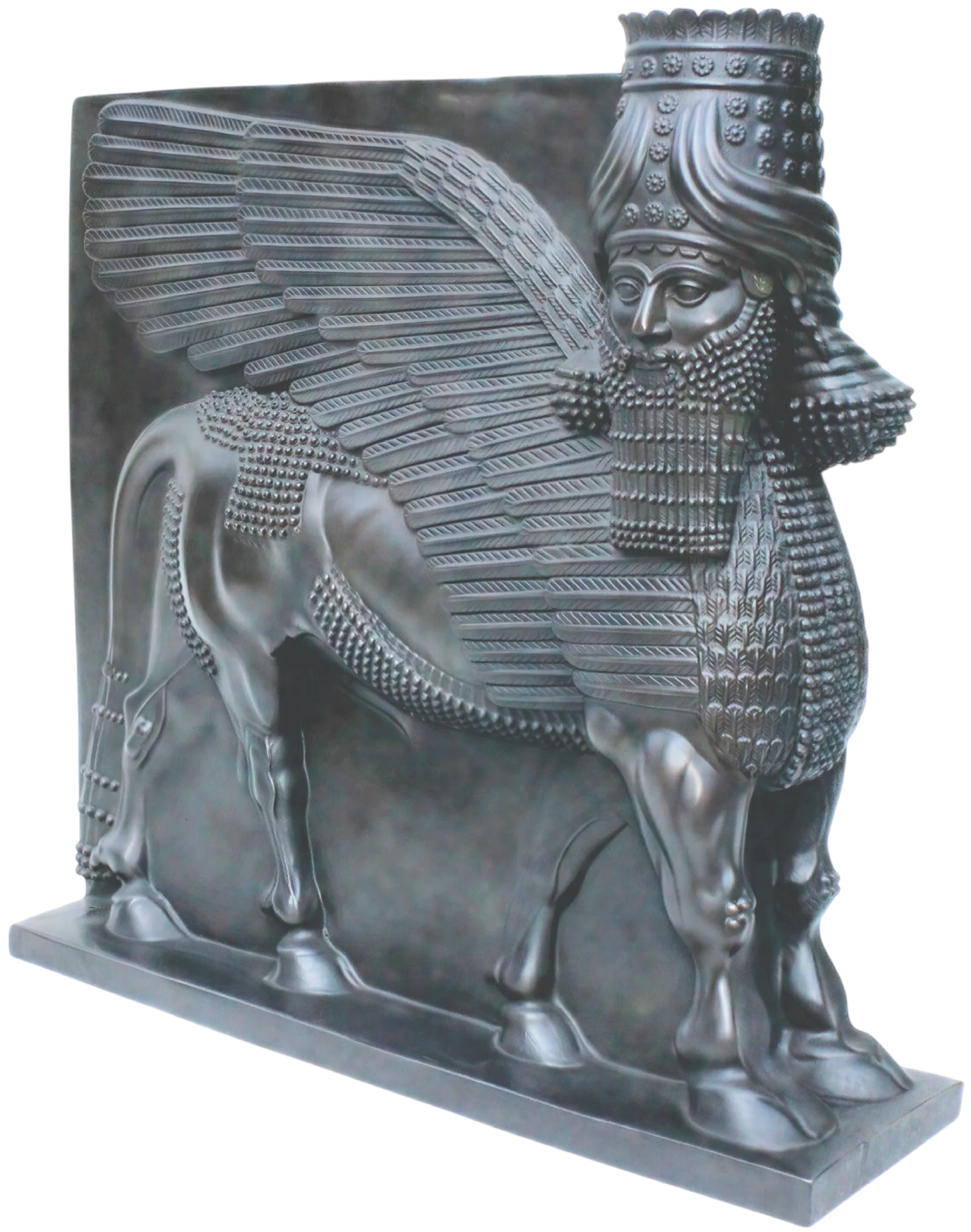
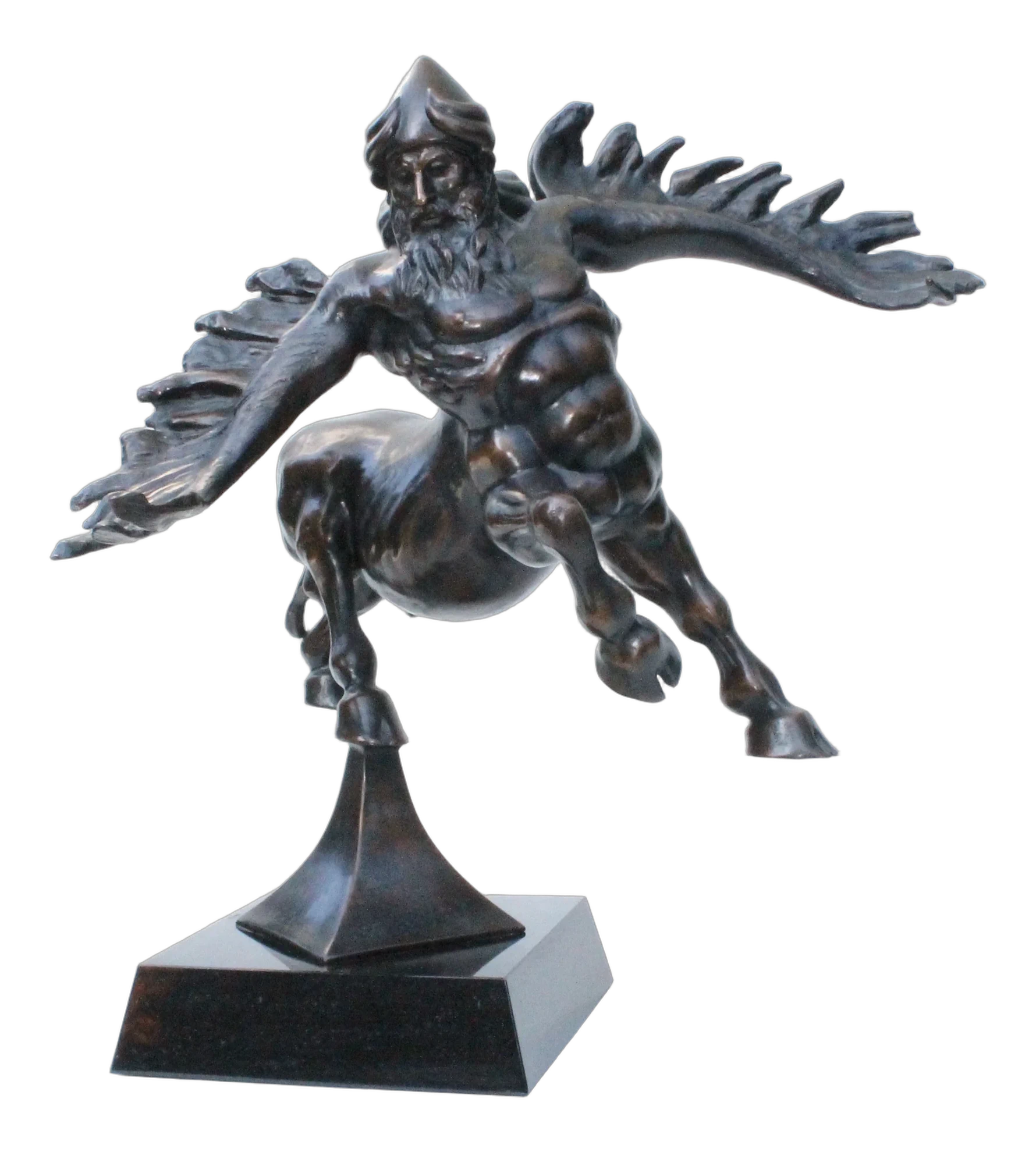
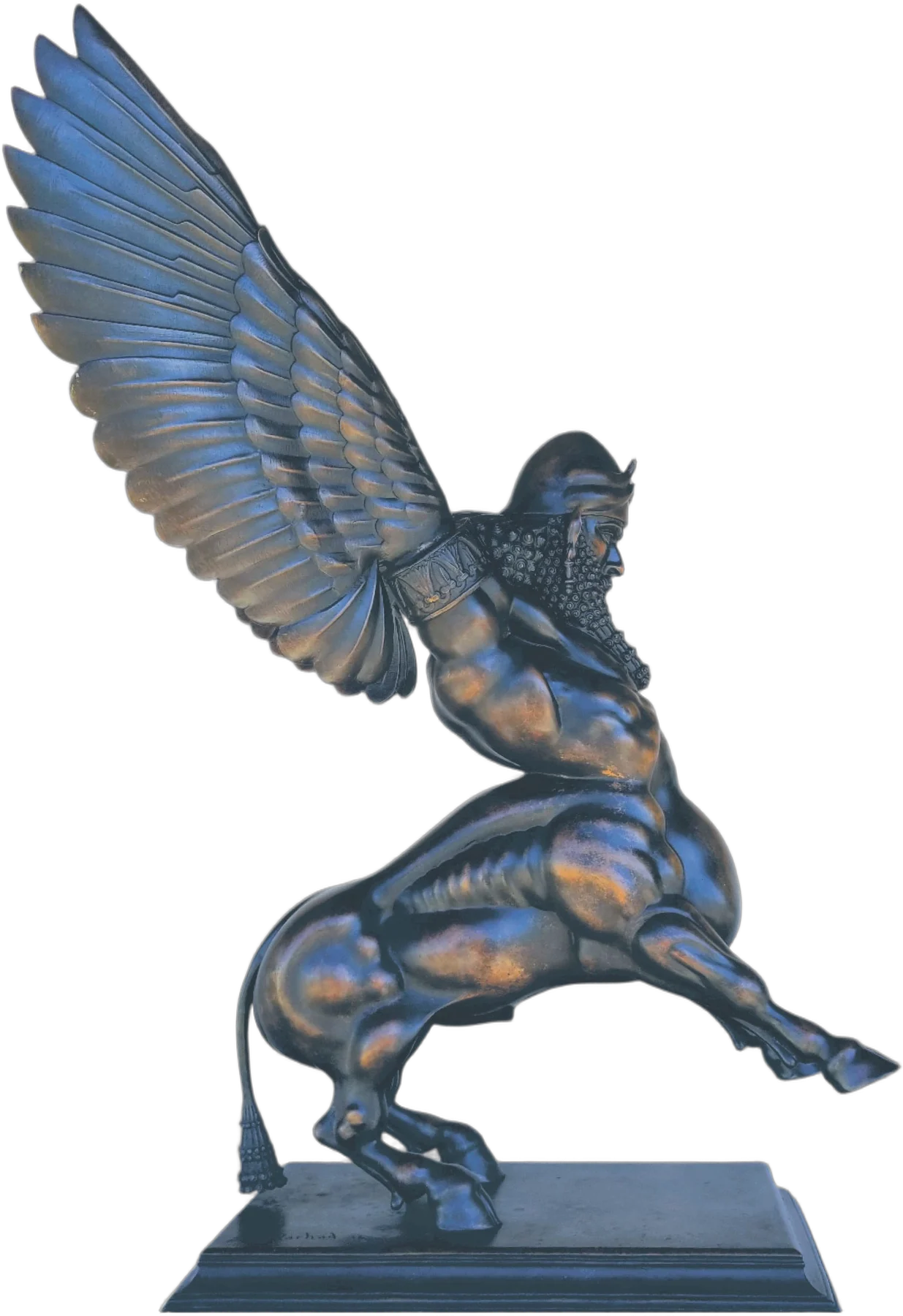
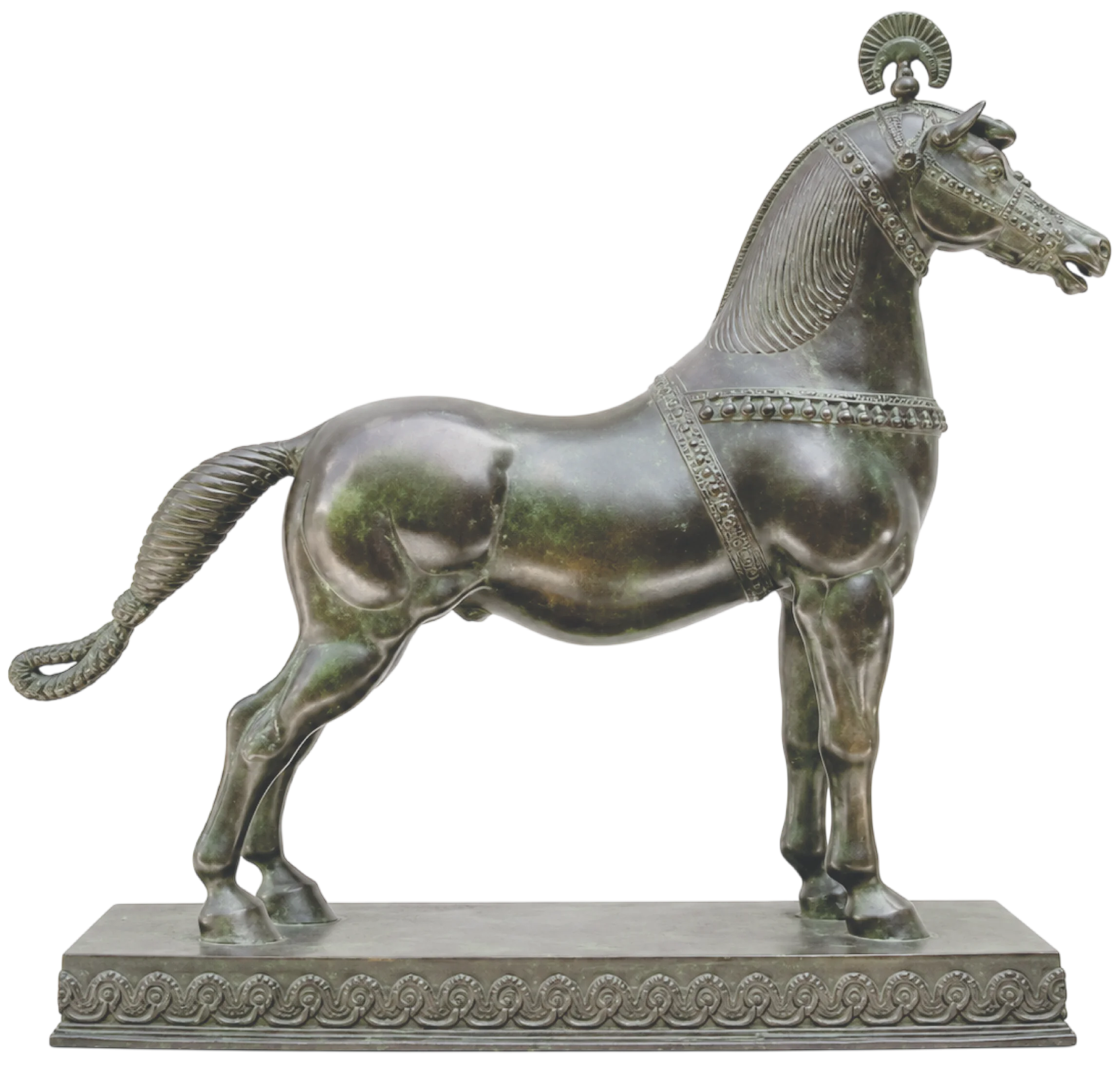
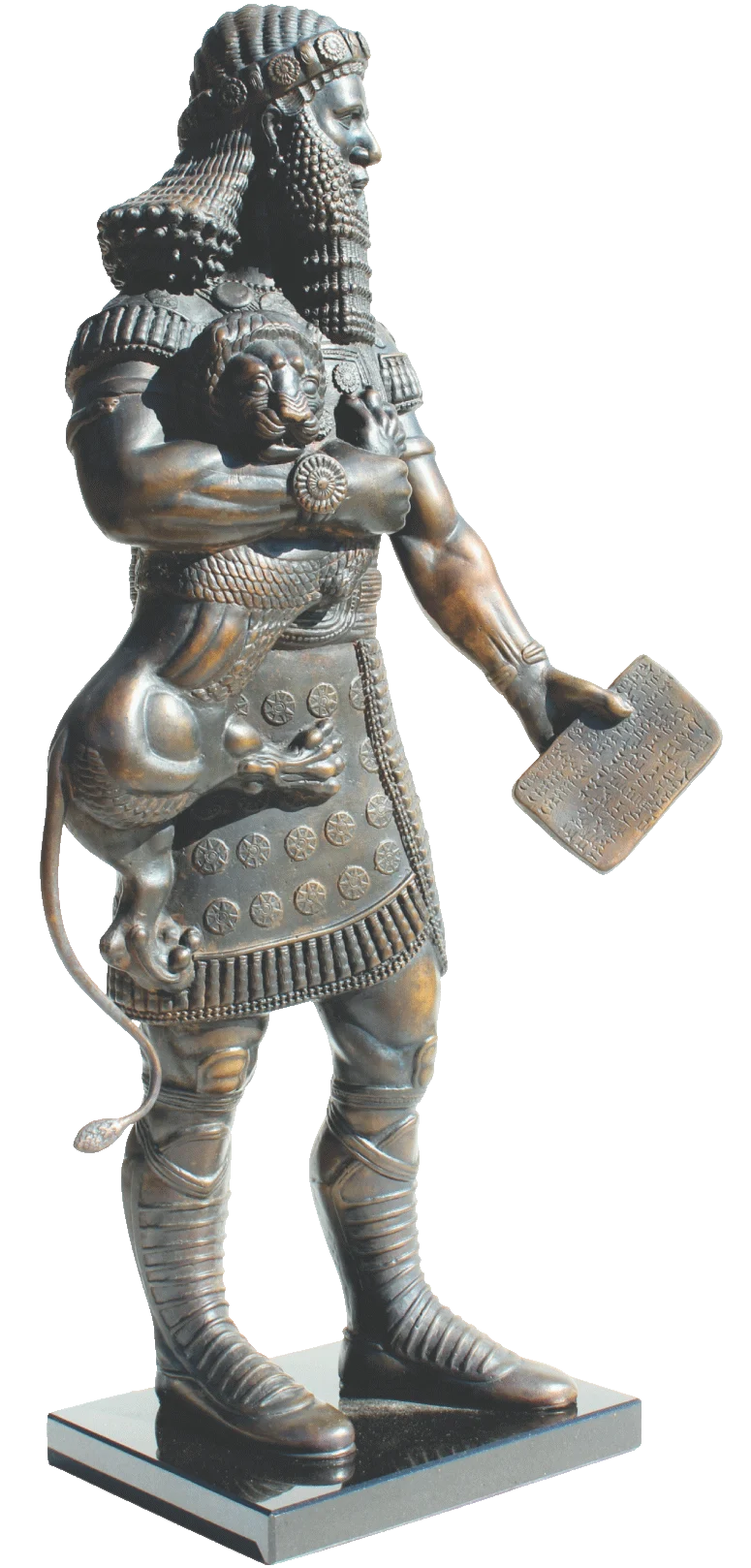
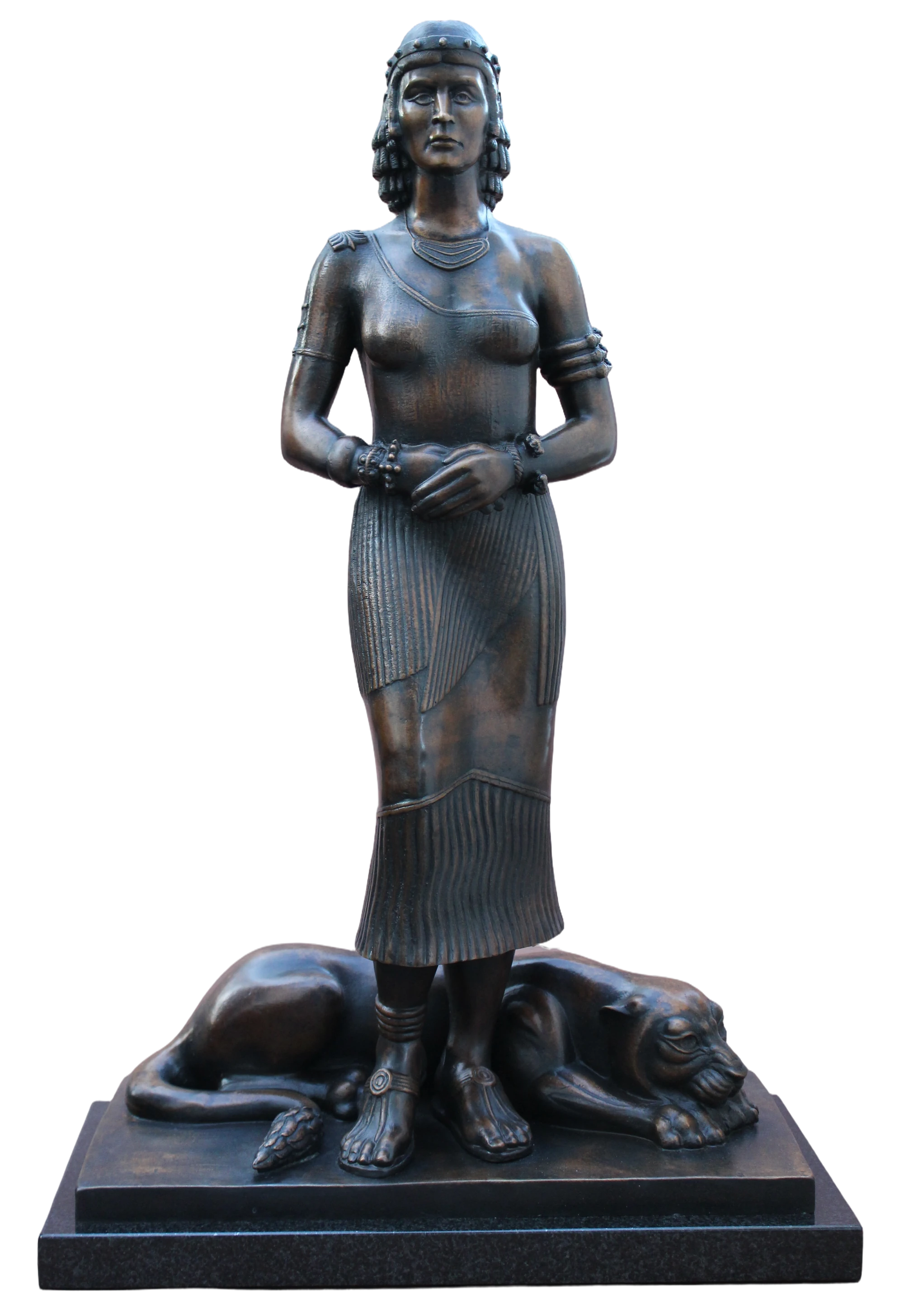
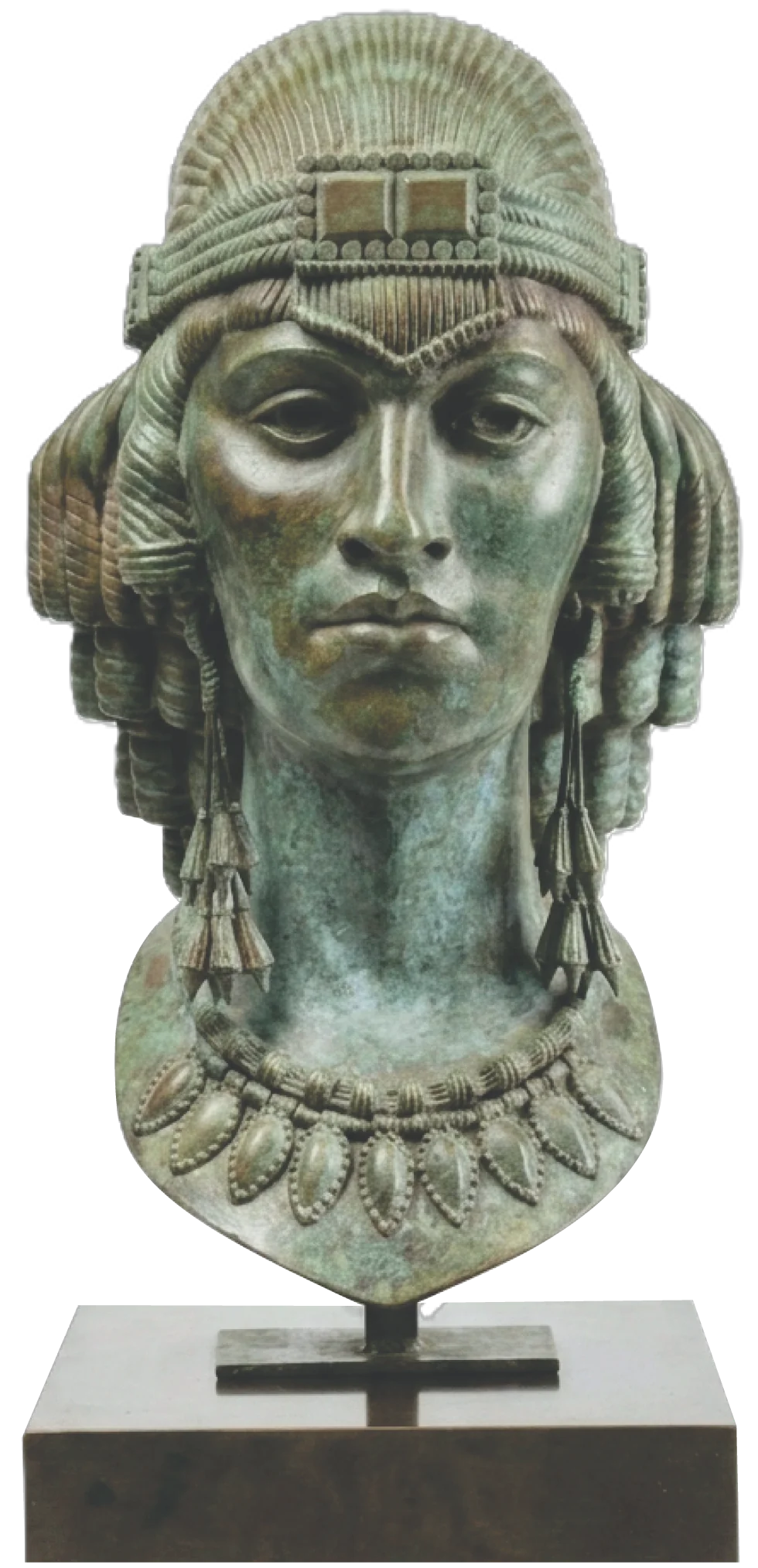
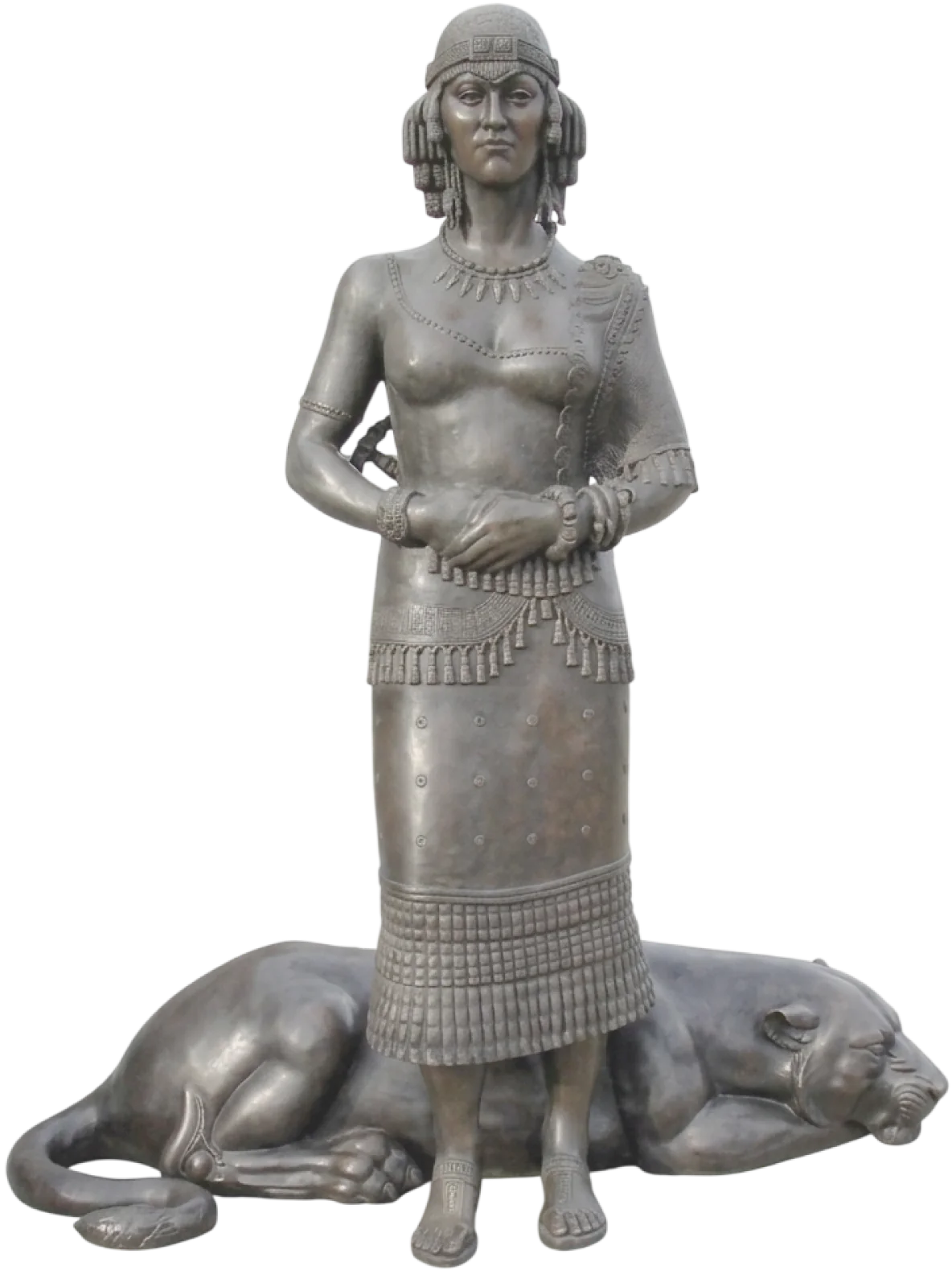
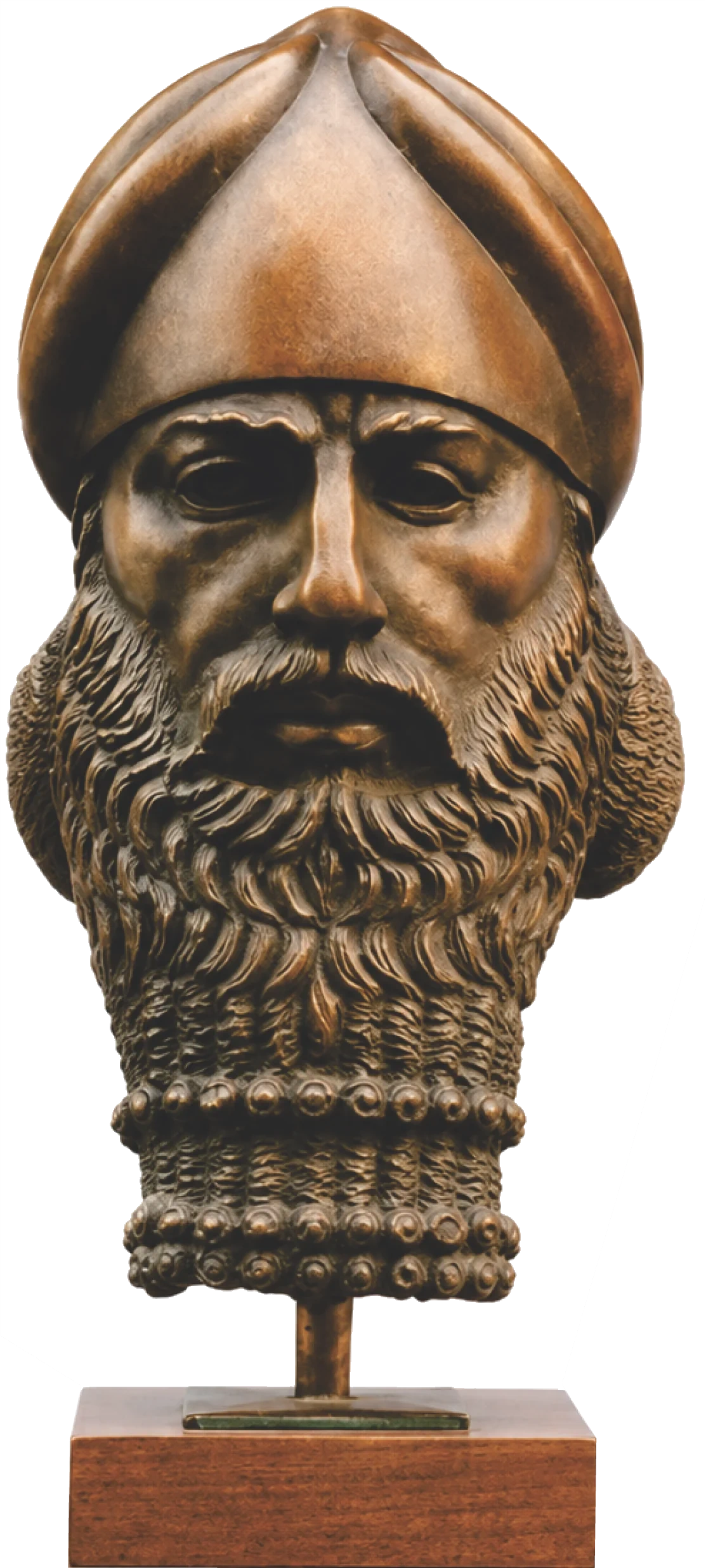
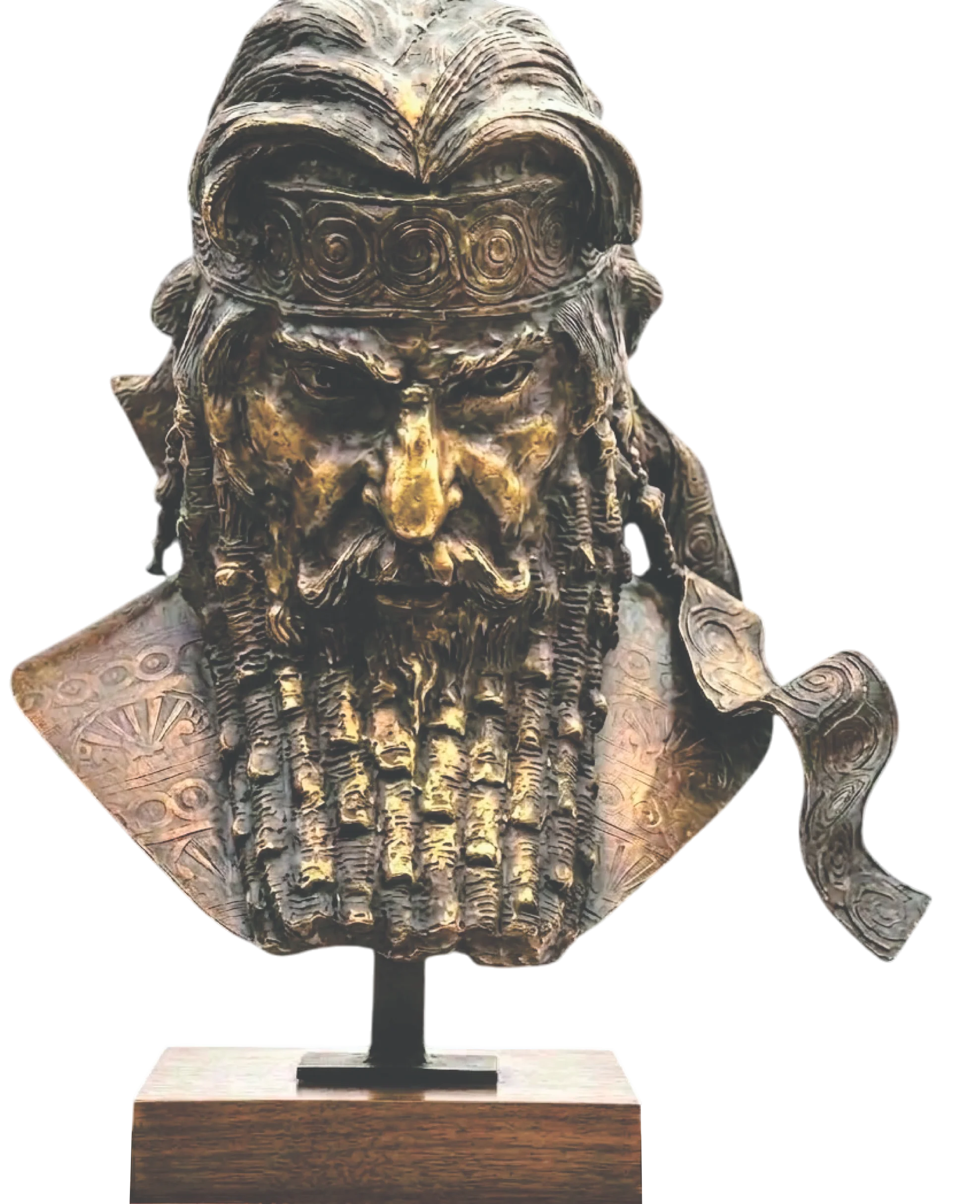
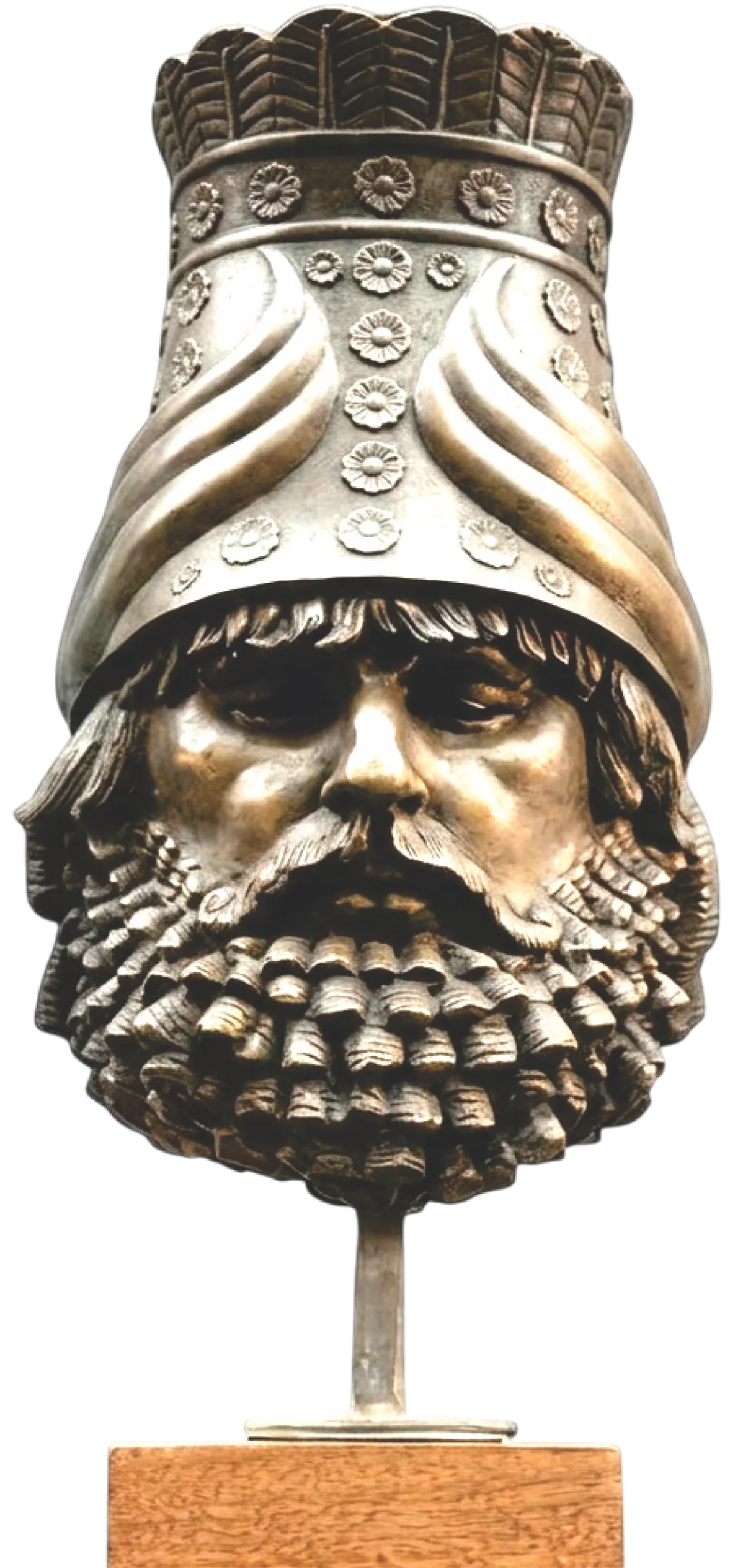
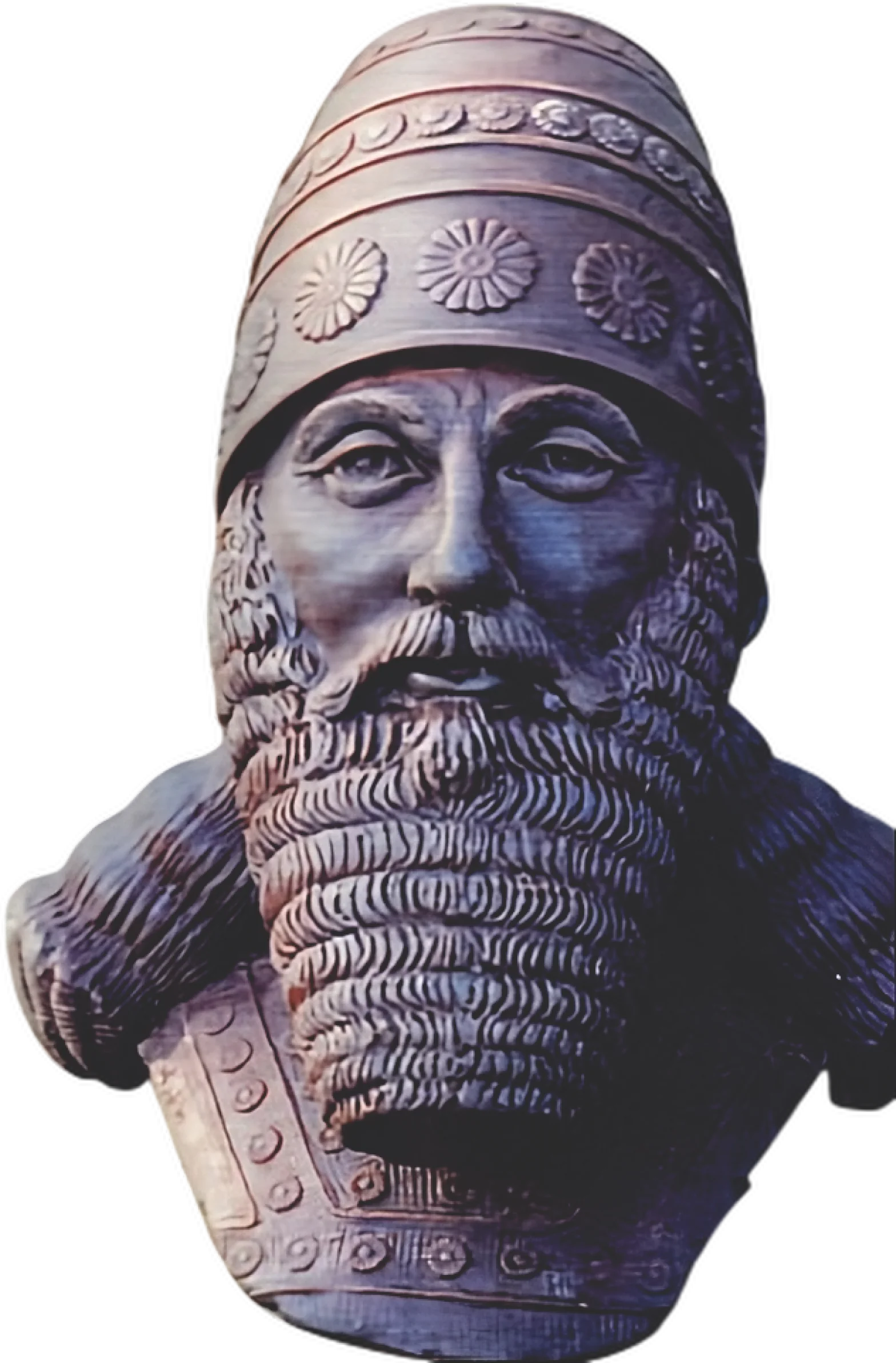
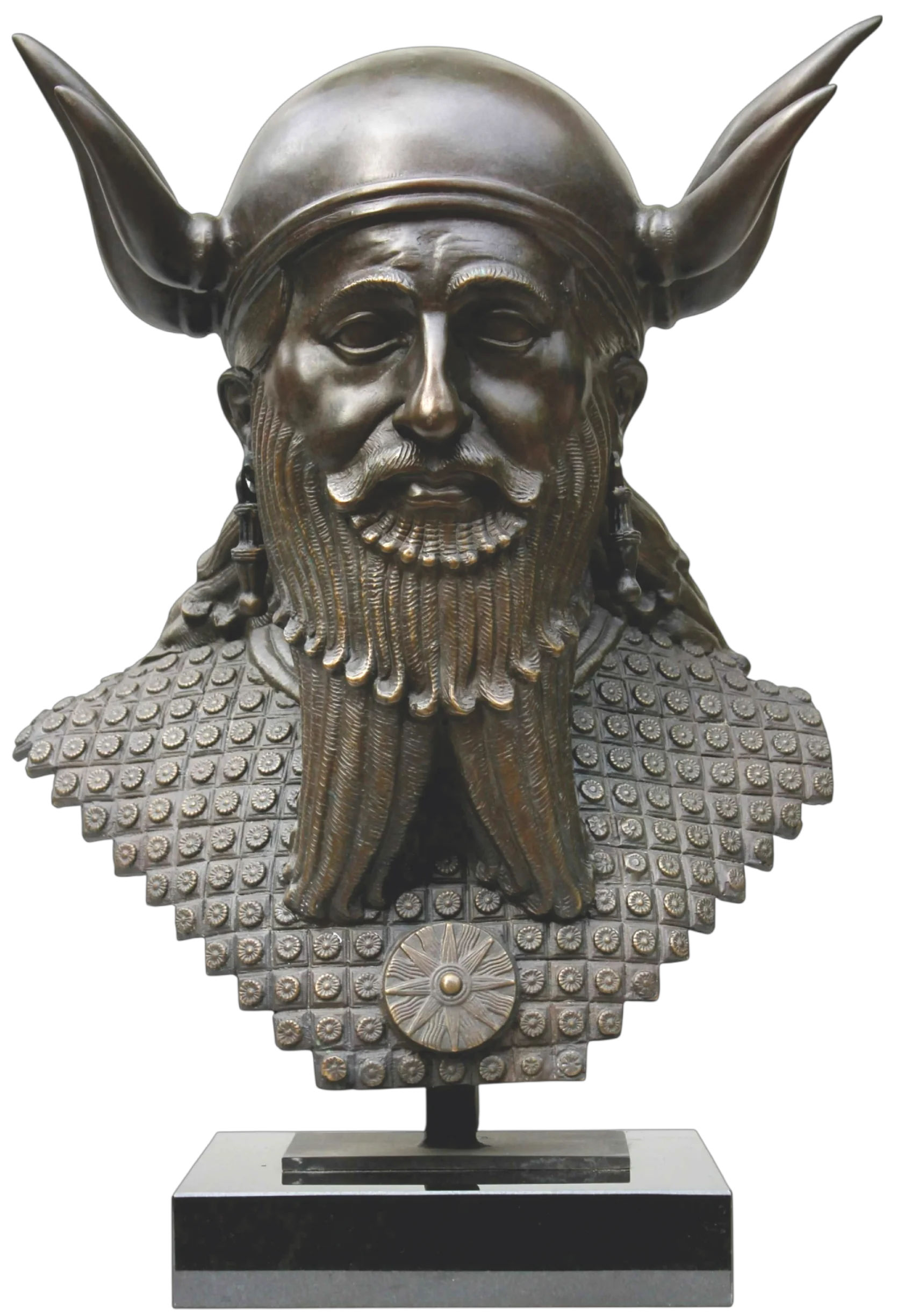
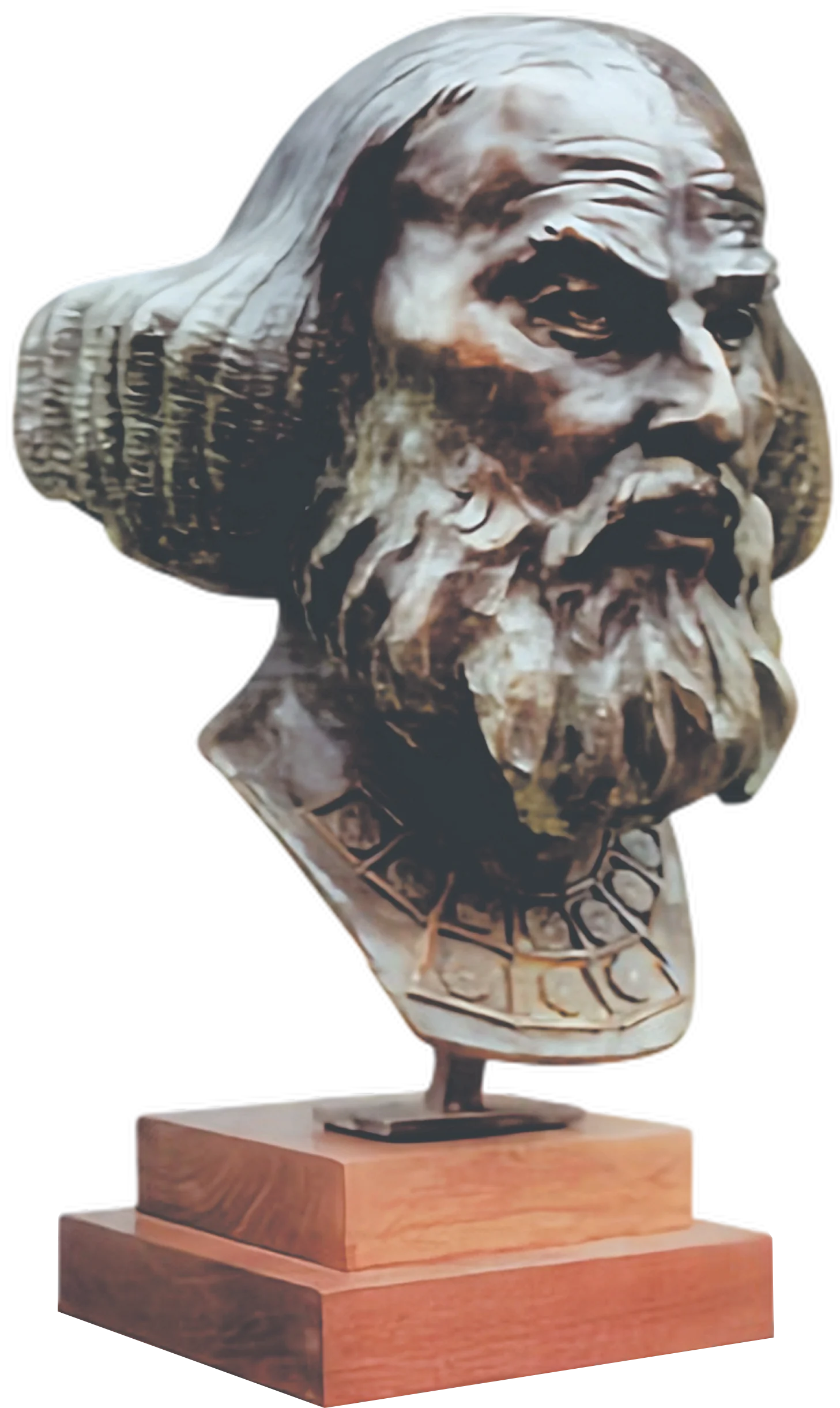
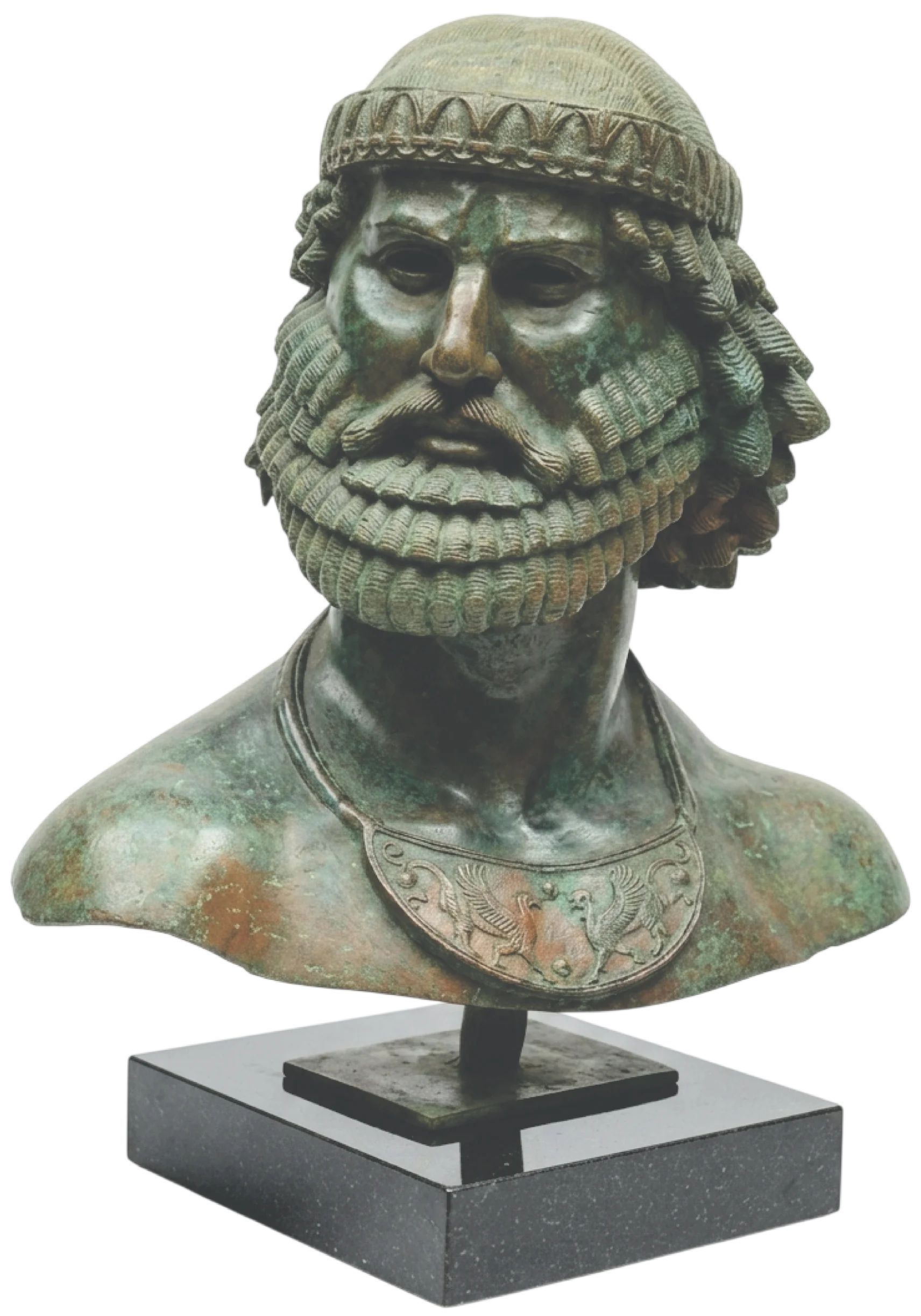
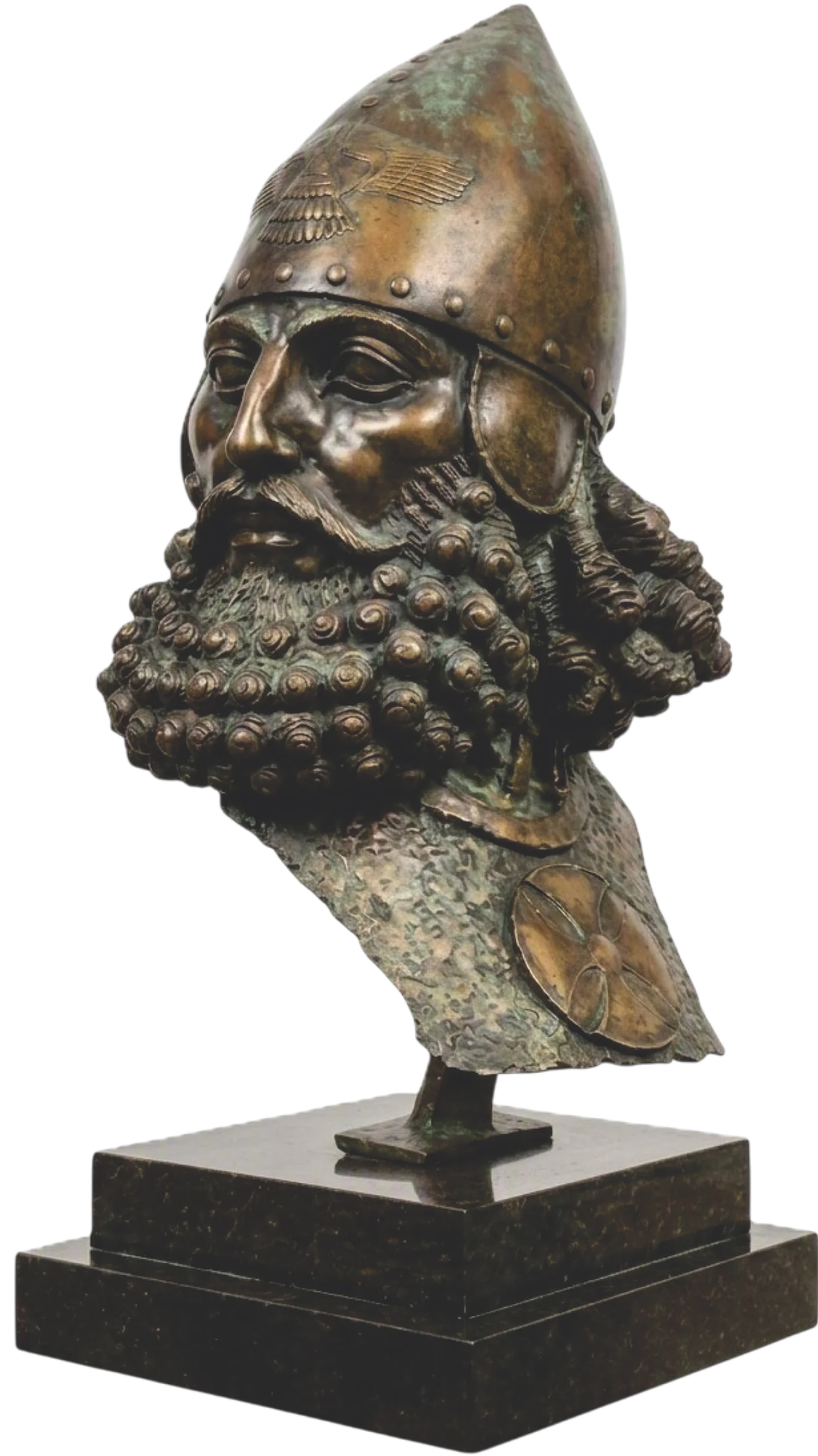
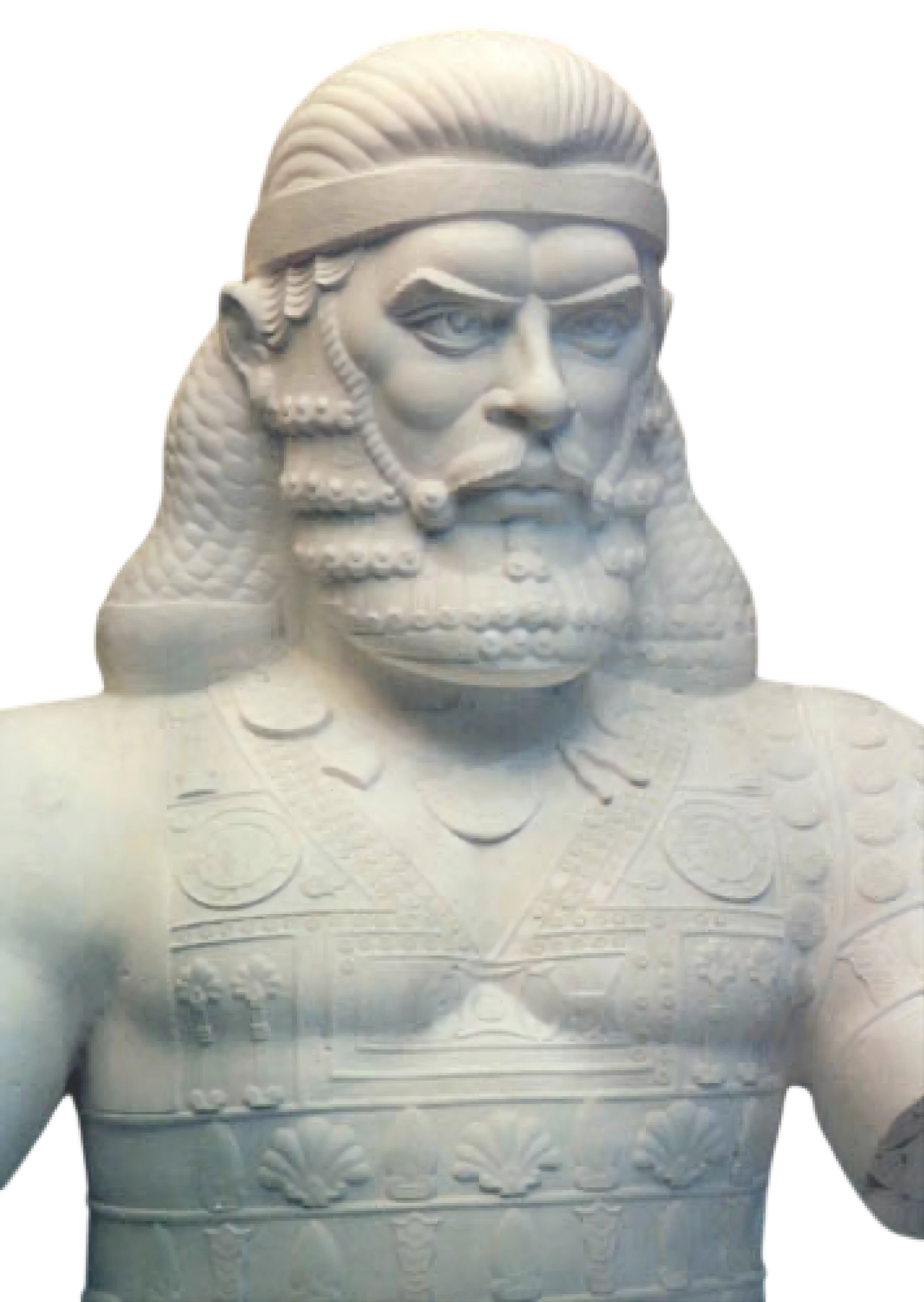
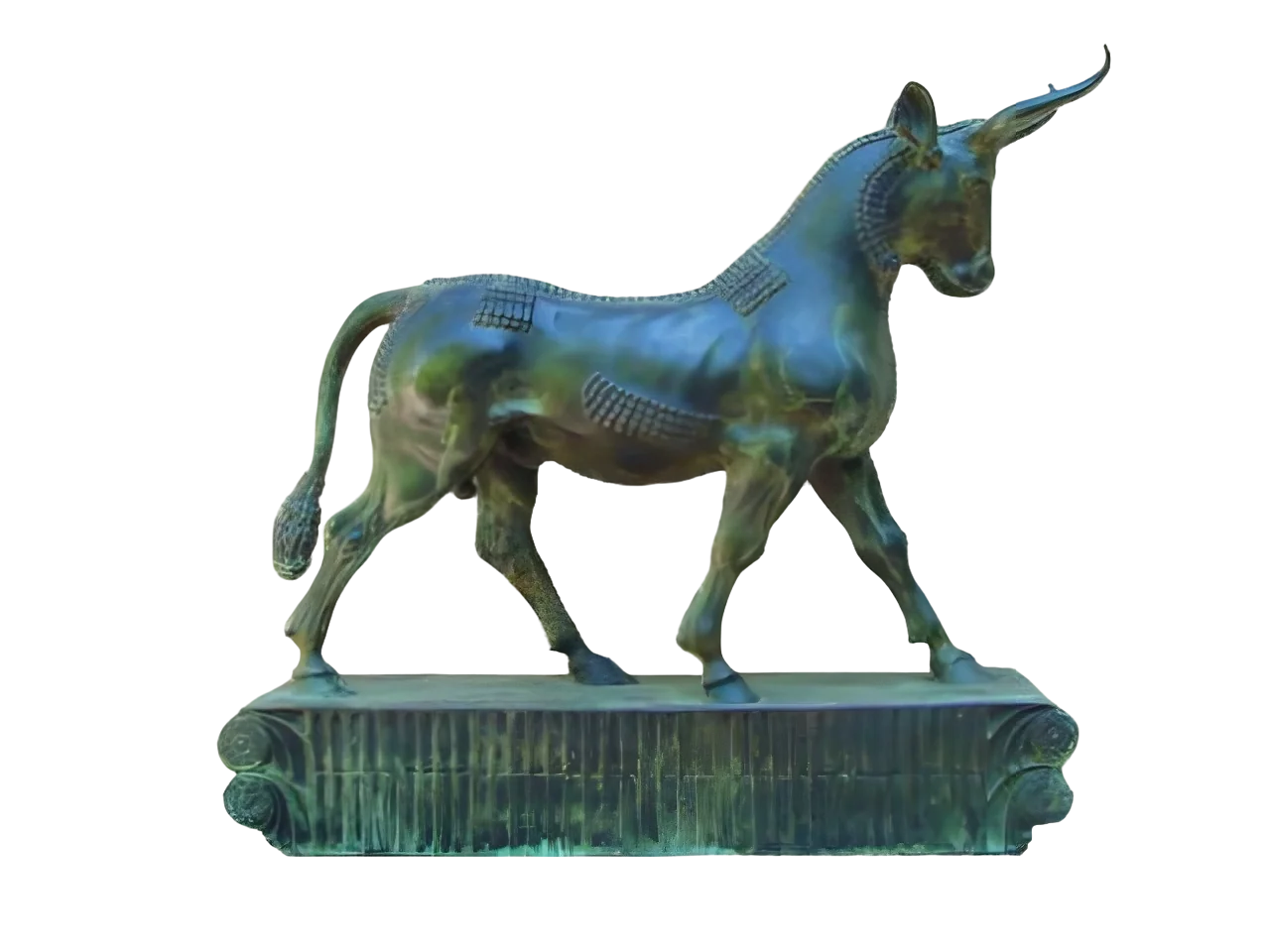
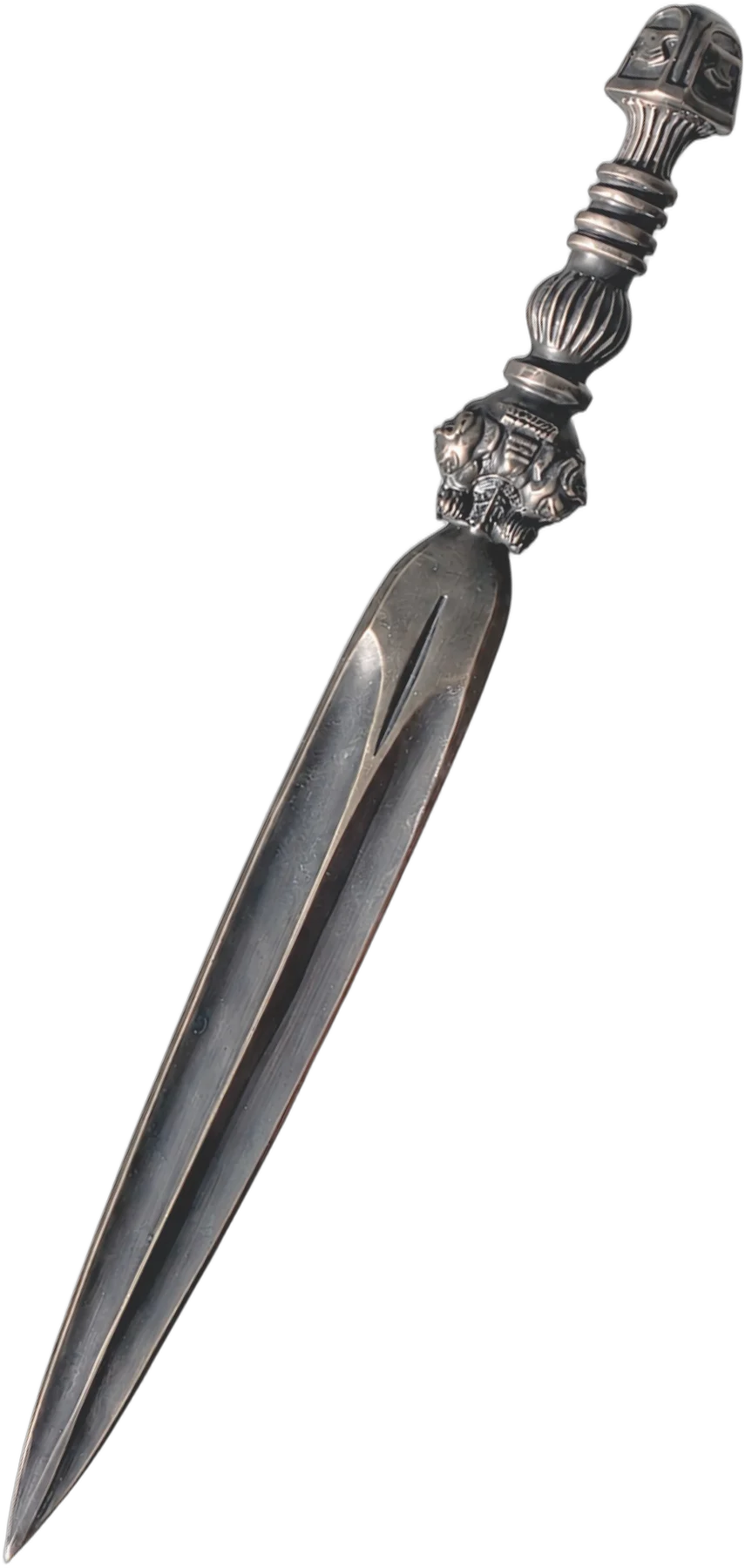
Lion Hunt????, ?, ?Needs textAllaha-Ashur2008, Bronze, 29 x 23 inOne of the essential Assyrian images, the Allaha-Ashur is taken from a bas-relief as well as a wall painting. The Assyrian god, Ashur, is shown sending rays of sunlight to earth to nourish the crops and his people. The ring of fire, the halo, represents the sun. Many people still saddled with the belief that the Assyrians were barbarians believe this is a symbol of war. They are mistaken. The bow, which is merely a continuation of the sun's ring, has no arrow, though it is cocked back and ready to shoot. What is being showered down on earth is sunlight, rays of sunshine.Assyrian Horse Head1997, Bronze, Life SizeThe Assyrians had their own way of depicting horses, perhaps their own sort of horses, which the Assyrians received in tribute from other tribes.Chariot of Ashurnasirpal1984, Bronze, 24" BaseThe three-horse chariot was an important part of Assyrian military prowess. This is taken, as are most of the following sculptures, from actual, ancient, bas-relief images.Lion Hunt of Ashurbanipal2015, Bronze, 30 x 16 inThis piece is taken from a carved stone wall relief from the palace of Ashurbanipal and shows the king at his favorite sport.Mounted ArcherTentative: no matching page found on fredparhad.com. A mounted archer drawing a bow, on a rearing horse.Lamassu1995, Bronze, 18 x 17 inThis is the most recognized symbol of the Assyrians. It shows the head of a king, the body of the bull and the wings of an eagle. Representing the intelligence of the human, the reproductive might of the bull and the spiritual realm the eagle ascends to. There are many versions in museums today. This one is, so far, the only one of its kind. The original is in the Oriental Institute in Chicago. It stands sixteen feet tall and is the only one in existence with its head turned to the side.Flying Lamassu1998, Bronze, 18 x 19 inThis is my own rendition of another of the essential Assyrian images, the Winged Bull, also called "Winged Genius" and, in our language, Lamassu. The stiff formality of Assyrian sculpture is gone and the figure is given movement.Wingspan2019, Bronze, 27 x 20 x 9 inAshurbanipal Maquette1983, Bronze, 27 inThis was the model used in creating the monument of Ashurbanipal, though a few changes were made from model to monument.Shumirum Maquette1987, Bronze, 25 inThe model used to create the monument of Shumirum.Assyrian Horse1991, Bronze, 21 x 22 inAfter a bas-relief carving from the palace of Ashurbanipal. Assyrian artists are most well-known for their moving depictions of animals. There they could engage in more naturalistic portrayals of movement and feeling. This, however, is obviously a horse of a royal nature, its stance is as solid and poised as that of any Assyrian monarch who would ride it.Adad-Nariri III1994-96, Bronze, Larger than LifeSargon the Great, also known as Sargon of Akkad, reigned in Mesopotamia from 2334 to 2279 BCE. By way of his conquests of the Sumerian city-states, he is known for establishing the worlds' first empire; the Akkad dynasty ruled Mesopotamia for well over a century.Sennacherib1994-96, Bronze, Larger than LifeSon of Sargon II, and king of Assyria from 704 to 681 BCE. Sennacherib was the angriest looking king I sculpted. He was angry because the Babylonians rebelled and killed his eldest son, who had been placed over them as governor.For that reason he burned Babylon to the ground. And then his son, Esarhaddon, feeling badly about it, re-built Babylon. Many of the walls Sennacherib built for the ancient Assyrian capital, Nineveh, still stand to this day.Tiglath-Pilessar III1994-96, Bronze, Larger than LifeRuling from 745 to 727 BCE, after seizing power during a civil rebellion, Tiglath-Pileser III was King of the great Neo-Assyrian Empire. Introducing new civil and political systems, he is also among the world's most successful military commanders. Transforming the Assyrian army, he stretched the traditional boundaries of Assyria into what is now considered to have been the Assyrian Empire.Nimrod1994-96, Bronze, Larger than Life"The mighty Hunter Before the Lord"Sargon II1994-96, Bronze, Larger than LifeKing of Assyria from 721 to 705 BCE, Sargon II, whose throne name means "the king is true," took over after the death of Shalmaneser V. One of his inscriptions explains the political reasons behind this choice of name: "My name, which the great gods assigned to me in order to uphold law and justice, to help the powerless prevail and to protect the weak."Shalmaneser1994-96, Bronze, Larger than LifeShalmaneser, meaning "the god Salmanu is foremost," was king of Assyria from 727 to 722 BCE, son of Tiglath-Pileser III, and brother to Sargon II. A compelling leader, quelling a rebellion against the Israelites, he fought and died maintaining the throne's supremacy.Tukulti-Ninurta I1994-96, Bronze, Larger than LifeTukulti-Ninurta I, whose name means, "my trust is in [the warrior god] Ninurta," was king during the Middle Assyrian Empire, from 1366 to 1050 BC. Shortly following his creation of a new capital city, Kar-Tukulti-Ninurta, he was murdered by his rebellious sons.Sargon the Great1994-96, Bronze, Larger than LifeSargon the Great, also known as Sargon of Akkad, reigned in Mesopotamia from 2334 to 2279 BCE. By way of his conquests of the Sumerian city-states, he is known for establishing the worlds' first empire; the Akkad dynasty ruled Mesopotamia for well over a century.Shumirum Bust1997, Bronze, Larger than LifeTaken from the original monument of Shumirum.Assyrian Ceremonial Dagger?, Bronze, 2 x 22 in